Category: Uncategorized

  • BLM Wild Horses and Our Environment: Yet More BLM USDA Controversey

    valley below onion mtn 4_24_13

    The fool doth think he is wise, but the wise man knows himself to be a fool.”
    ― William Shakespeare

    This article is Part Three of a 3-Part series on cattle grazing, sheep grazing, wild horses and the truth. . .

    This was brought about by the many decisions both the Bureau of Land Management and the Department of the Interior had placed into their budget, then into action. The government agencies info-based data premised upon false and erroneous data realistically created problems in both the environment as well as in the wildlife ecosystems. All Public Lands now suffer, needlessly, due to decisions based not on true facts and scientific data, but upon politically manipulated science, driven by corporate agendas, and ruined lands beyond further use by cattle and sheep grazing.

    The BLM and the U.S. Forestry Dept. (quite ironically) withdrew, taken out of technical reports and informational media driven reports in total, any data gathering or data in reports that included the accurate count of cattle and effects of cattle grazing on Public Lands (reports sanctioned by government contracts and/or research paid for by taxpayers), as well as the ability to gather causation of cattle on Public Lands.

    BLM administrators argue that including cattle grazing into their reports, and collecting data on cattle currently populating Public Lands, can and would sway the technical data unfavorably.

    Without this data, truthfully, our Public Lands are being destroyed, with the government agencies responsible for such wrong-doing being complacent about the destroyed land, in total! Cost to taxpayers = $Billions!

    Total livestock use on our Public Lands (i.e. precisely Cattle Grazing and Sheep Grazing) currently exceed 10,000,000 Animal Unit Mouths to feed, and measured in AUM Units — or Annual Unit Mouths. An AUM represents forage use by a cow and a calf pair, or five sheep for one month. Left out of the this equation is Horses, as there is not only no available method to count the Horses within a Data Gathering and true representation of such, but there simply exists no prevalent or scientific method of doing a proper Horse Count for scientific purposes within BLM or our Public Lands.

    When we break the mysterious Government-Speak, we discover the fact that these government agencies are expecting our Public Lands to feed, in truth, approximately in excess of 25,000,000 cattle and 20,000,000 sheep a month, and add to that more and more on a constant basis. The problem remains consistent, due to falsified information and data gather, heavily manipulated and corrupt data, and exclusion of primary source material within the data (i.e. specifically cattle and sheep data), that America’s Public Land’s are being ruined due to bad decisions based on false information, over grazing, and mismanagement.

    We also must keep in mind these are low-numbers of population in regard to cattle and sheep (the most prevalent contributing factor to Public Land destruction), considered by many terrestrial biologists and other research scientist’s. These elements of data are spread over eleven contiguous western states, with five of these states bearing the largest number of cattle and sheep grazing on Public Lands. These five states are also the most controversial in regard to wild horse herd roundups and waste of taxpayer money within the context of roundups and wild horse herd storage.

    Consumerism and Meat Consumption

    When we consider, for example the decline in meat consumption in America, more problems develop within adequate reasoning for cattle and sheep remaining on Public Lands. There has been a consistent drop of beef consumption in America, and at last count, upon research of this particular market as of August 2013 —

    Beef Consumption Down 12.8% and decreasing currently as this article written (Per USDA Report Sept. 2013).

    Sheep similar in count, and decreased nearly 28% at the end of August 2013 (Per USDA Report of 2013).

    This is significant as Public Land Grazing of cattle fulfills only 2.1% of the commercial market for beef, and only .9% of sheep.

    So one has to consider, as taxpayers and as American’s why the BLM, the Forestry, and the USDA, among others, insist on us all paying (tax money for administrative and bogus other criminal activity from welfare ranchers, et al.) for the welfare ranchers to raise beef and sheep on Public Lands, when indeed there is no market for the same in the United States.

    Are we to then believe that we are sacrificing America’s Wild Horse Herds for foreign shipment and their purchase of our beef and sheep products? Well, yes, we are now currently doing that!

    As well, taxpayers pay-out such an astronomical amount of money, with no discount or return on this same beef and sheep grazing on Public Lands, that it becomes simply criminal in nature, stirred by corporations and politicians to enhance their profit base.

    But this article is not about money, welfare ranching, or current reductions in the beef and sheep commercial markets. This article is about the sacrifice we make, here in America, in regard to our wildlife and environment that exists on our Public Lands, and especially the truth behind the Wild Horse Herd roundups and storage of them! This situation is a paramount sacrifice that is especially toxic, controversial, and needless, to say the least. It is simply based on no quality or truthful data!

    Environmental and Wildlife Damage

    It is important to realize that cattle and sheep use on Public Lands as well as Forestry Service lands becomes far more destructive, within a context of consistent and prolonged destruction to every ecosystem used to graze upon. Ecosystems demolished most often by irresponsible herding practice by welfare ranchers and too many cattle or sheep on a particular stretch of Public Lands. The fact is the situation is a far greater destruction in proportion with that of roads, timber harvests, and wildfires combined. . .

    Least we also not forget that the effects of cattle and sheep while grazing on Public Lands prompted federal regulatory controls due to initial harmful effects to include trampling of vegetation, soils, woody plants, and ruination of streambanks as early as the 1890’s. So in reality this is not a new perception, rather, a situation stretched as far as it can possibly go, and truthfully must stop immediately.

    Continued Use of Public Lands for Grazing

    If livestock use on public lands continues at current levels, its interaction with anticipated changes in climate will likely worsen soil erosion, dust generation, and stream pollution. Soils whose moisture retention capacity has been reduced will undergo further drying by warming temperatures and/or drought and become even more susceptible to wind erosion. Increased Aeolian deposition on snow pack will hasten runoff, accentuating climate-induced hydrological changes on many Public Lands.

    Warmer temperatures will likely trigger increased fire occurrence, causing further reductions in cover and composition of biological soil crusts, as well as vascular plants. In some forest types, cattle and sheep grazing has contributed to altered fire regimes and forest structure.

    Getting Rid of Grazing on Public Lands

    The economic impacts of managing public lands to emphasize environmental enhancements would be modestly positive. Other economic effects could include savings to the US Treasury because federal grazing fees on BLM and FS lands cover only about one-sixth of the agencies’ administration costs.

    Most significantly, improved ecosystem function would lead to enhanced ecosystem services, with broad economic benefits. Various studies have documented that the economic values of other public-land resources (e.g., water, timber, recreation, and wilderness) are many times larger than that of grazing. Welfare ranching and cattle/sheep grazing has, indeed, has virtually become more of a criminal endeavor than anything else.

    CONCLUSIVELY

    Historical and on-going grazing from cattle and sheep use has affected soils, vegetation, wildlife, and water resources on vast expanses of public forests, shrublands, and grasslands across the American West in ways that are likely to accentuate further destruction and ruination of Public Lands.

    If effective adaptations to the adverse effects of climate change are to be accomplished on western public lands, large-scale reductions or cessation of ecosystem stressors associated with cattle/sheep use are crucial. Federal and state land management agencies should seek and make wide use of opportunities to reduce significant cattle/sheep impacts, by ridding Public Lands of both, in order to facilitate ecosystem recovery and improve resiliency.

    Such actions represent the most effective and extensive means for helping maintain or improve the ecological integrity of western landscapes and for the continued provision of valuable ecosystem services due to no longer having cattle or sheep grazing on Public Lands.

    ____________________________________

    References:
    Abella SR (2008) A systematic review of wild burro grazing effects on Mojave Desert vegetation, USA. Environ Manage 41:809–819
    Allen DL (1974) Our wildlife legacy. Funk and Wagnalls, New York
    Allington GRH, Valone TJ (2010) Reversal of desertification: the role of physical and chemical soil properties. J Arid Environ 74:973–977
    Angermeier PL, Karr JR (1994) Biological integrity versus biological diversity as policy directives. Bioscience 44:690–697
    Asner GP, Elmore AJ, Olander LP, Martin RE, Harris AT (2004)
    Grazing systems, ecosystem responses, and global change. Ann Rev Environ Resour 29:261–299
    Backlund P, Janetos A, Schimel D, Hatfield J, Ryan M, Archer S, Lettenmaier D (2008) The effects of climate change on agriculture, land resources, water resources, and biodiversity. A report by the US Climate Change Science Program and the Subcommittee on Global Change Research. US Environmental Protection Agency, Washington, DC, http://www.climate science.gov/Library/sap/sap4-3/final-report/default.htm
    Balling RC, Klopatek JM, Hildebrandt ML, Moritz CK, Watts J (1998) Impacts of land degradation on historical temperature records from the Sonoran Desert. Clim Change 40:669–681
    Barnosky AD, Hadly EA, Bascompte J et al (2012) Approaching a state shift in Earth’s biosphere. Nature 486:52–58
    Bates BC, Kundzewicz ZW, Wu S, Palutikof JP (eds) (2008) Climate change and water. In: Technical paper of the intergovernmental panel on climate change. IPCC Secretariat, Geneva
    Baxter CV, Fausch KD, Saunders WC (2005) Tangled webs: reciprocal flows of invertebrate prey link streams and riparian zones. Freshw Biol 50:201–220
    Coggins GC, Wilkinson CF, Leshy JD, Fischman RL (2007) Federal public land and resources law. Foundation Press, New York
    Connelly JW, Knick ST, Schroeder MA, Stiver SJ (2004) Conservation assessment of greater sage-grouse and sagebrush habitats. Western Association of Fish and Wildlife Agencies, Cheyenne.
    Cowley ER (2002) Monitoring current year streambank alteration. US
    Bureau of Land Management, Boise CWWR (Centers for Water and Wildland Resources) (1996) Sierra Nevada ecosystem project report. Wildland Resources Center Report No. 39. University of California, Davis
    D’Antonio CM, Vitousek PM (1992) Biological invasions by exotic grasses, the grass/fire cycle, and global change. Annu Rev Ecol Syst 23:63–87
    Dobkin DS, Rich AC, Pyle WH (1998) Habitat and avifaunal recovery from livestock grazing in a riparian meadow system of the northwestern Great Basin. Conserv Biol 12:209–221
    DOI-OIG (Department of the Interior-Office of the Inspector General) (2010) Bureau of land management wild horse and burro program. Report C-IS-BLM-0018-2010, Washington, DC
    Donahue DL (2007) Federal rangeland policy: perverting law and jeopardizing ecosystem services. J Land Use Environ Law 22:299–354
    Dwire KA, Ryan SE, Shirley LJ, Lytjen D, Otting N, Dixon MK (2007) Influence of herbivory on regrowth of riparian shrubs following a wildland fire. J Am Water Resour Assoc 42:201–212
    EPA (Environmental Protection Agency) (1999) A review and synthesis of effects of alterations to the water temperature regime on freshwater life stages of salmonids, with special reference to chinook salmon, USEPA Technical Report EPA 910-R-99-010.
    USEPA, Seattle, http://www.maweb.org/documents/document.355.aspx.pdf
    EPA (Environmental Protection Agency) (2009) National water quality inventory: report to congress, 2004 reporting cycle. US Environmental Protection Agency EPA-841-R-08-001, Washington, DC
    Estes JA, Terborgh J, Brashares JS, and 21 others (2011) Trophic downgrading of planet earth. Science 333:301–306
    Field CB, Mortsch LD, Brklacich M, Forbes DL, Kovacs P, Patz JA, Running SW, Scott MJ (2007) North America. Climate change 2007: impacts, adaptation and vulnerability. In: Parry ML, Canziani OF, Palutikof JP, van der Linden PJ, Hanson CE (eds)
    Contribution of working group II to the fourth assessment report of the intergovernmental panel on climate change. Cambridge University Press, Cambridge, pp 617–652
    Fleischner TL (1994) Ecological costs of livestock grazing in western North America. Conserv Biol 8:629–644
    Thornton PK, Herrero M (2010) The inter-linkages between rapid growth in livestock production, climate change, and the impacts on water resources, land use, and deforestation. World Bank, Policy Research Paper 5178, Nairobi, Kenya
    Torrell LA, Rimbey NR, Bartlett ET, Van Tassell LW, Tanaka JA (2001) An evaluation of the PRIA grazing fee formula. Current issues in rangeland resource economics: symposium proceedings. Western Regional Coordinating Committee on Rangeland Economics WCC-55. New Mexico State University Research Report Series 737, Las Cruces, New Mexico
    Trimble SW, Mendel AC (1995) The cow as a geomorphic agent, a critical review. Geomorphology 13:233–253
    Valone TJ, Meyer M, Brown JH, Chew RM (2002) Timescale of perennial grass recovery in desertified arid grasslands following livestock removal. Conserv Biol 16:995–1002
    Vincent CH (2012) Grazing fees: overview and issues. Congressional Research Service RS21232, Washington DC
    Weisberg PJ, Coughenour MB (2003) Model-based assessment of aspen responses to elk herbivory in Rocky Mountain National Park, USA. Environ Manage 32:152–169
    Welch BL (2005) Big sagebrush: a sea fragmented into lakes, ponds, and puddles. US Forest Service GTR-RMRS-GTR-144, Fort Collins, Colorado
    Westerling AL, Hidalgo HG, Cayan DR, Swetnam TW (2006) Warming and earlier spring increase western U.S. forest wildfire activity. Science 313:940–943
    Wilcove DS, Rothstein D, Dubow J, Phillips A, Losos E (1998)
    Quantifying threats to imperiled species in the United States. Bioscience 48:607–615
    Worster D (1992) Under western skies: nature and history in the American west. Oxford University Press, New York
    WSWC (Western States Water Council) (1989) Preliminary summary of findings, In: Nonpoint Source Pollution Control Workshop, Midvale, Utah, pp 25–28
    Wu L, He N, Wang Y, Han X (2008) Storage and dynamics of carbon and nitrogen in soil after grazing exclusion in Leymus chinensis grasslands of northern China. J Environ Qual 37:663–668
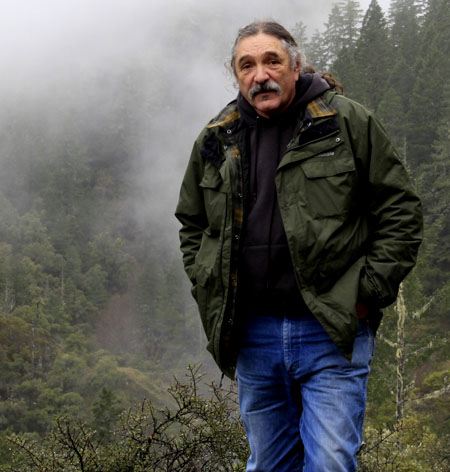
  • American’s Icons The Wild Horses Being Killed for Short Term Profits and Being Managed to Extinction by the BLM

    john_icon_photo

    2nd Article in this 3 part Series — As stated in the first article, of this 3 part series, the Bureau of Land Management (BLM) no longer has credibility in regard to any management criteria, that is within an honest context, when speaking or making decisions about America’s Wild Horse Herds on Public Lands. There exists no legitimate scientific study or research in regard to the BLMs decisions to roundup and essentially abuse or kill during the roundups or storage of America’s Wild Horses, and eventually send to slaughter America’s Icons, the Wild Horses.

    When tracking the reasons why the BLM make the decisions about roundups, we find three things — all of which considered illegitimate reasoning:

    1. The Environmental Impact Statements (all) do not contain thorough terrestrial, marine, ecosystem, grazing, or soil research — nor do they contain appropriate and meaningful recommendation toward the ultimate decision making process and in regard to a true impact of the Public Lands involved — rather, some EIS’s are eventually copied from other areas, then the titles changed to appear the EIS completed for the particular area noted, and submitted as such, but most often, that is when new EIS’s do exist, they are irresponsibly inaccurate or untruthful in total;

    2. There exists no consistent or honest wild horse head counts, whereas, inconsistency exists and easily observable from tables and supposed previous counts — as their current models and paradigm formulas inaccurate and thereby irresponsible, and are prejudice against wild horses and directly affirmative toward cattle, despite the obvious and plentiful and well referenced science and data available (BLM employees ignore this) stating the invasiveness and harm done by cattle (also see recent court transcripts for Murderer’s Creek, stating cattle the cause of harmful environmental damage, not the wild horses, even though the attempt was made to accuse the Wild Horse Herds roaming that area, the Federal Court Judge perused legitimate science data and research (as mentioned in the Judge’s final statement) to form the final decision — LOREN STOUT and PIPER STOUT, Civil No. 09-152-HA Plaintiffs, OPINION AND ORDER v. U.S. FOREST SERVICE, and U.S. FISH AND WILDLIFE SERVICE, et al.);

    3. Then the very sad and narrow in scope reasoning for BLM employees keeping welfare ranchers, foreign oil companies, and mining corporations happy, America’s Public Lands and America’s Icons, the Wild Horses are sacrificed, entire environment and ecosystems ruined, America’s Wildlife and vegetation sent to extinction, and all for small but quick profits; and in reality, for example the beef market (i.e. welfare ranchers on public lands contribute only 2.6% of beef to the commercial markets today) has declined 12.8% less Americans actually eat beef or beef products today, and now we sacrifice our Public Lands for welfare ranchers, etc., to sell to foreign countries — this is unacceptable!

    Note: Taxpayers pay a lot for the roundups and storage, $Millions, but receive nothing in return! The price is too costly to Americans, and the general American public agree and want horse roundups stopped!

    Federal Law and Policy

    Federal laws guide the use and management of public-land resources. Some laws are specific to a given agency (e.g. the BLM’s Taylor Grazing Act of 1934 and the FS’s National Forest Management Act [NFMA] of 1976), whereas others cross agency boundaries (e.g., Endangered Species Act [ESA] of 1973; Clean Water Act [CWA] of
    1972).

    A common mission of federal land management agencies is ‘‘to sustain the health, diversity, and productivity of public lands’’ (GAO 2007, p. 12). Further, each of these agencies has ample authority and responsibility to adjust management to respond to public land or federal lands grazing (GAO 2007) and other stressors.

    The FS and BLM are directed to maintain and improve the condition of the public rangelands so that they become as productive as feasible for all rangeland values. As defined, ‘‘range condition’’ encompasses factors such as soil quality, forage values, wildlife habitat, watershed and plant communities, and the present state of vegetation of a range site in relation to the potential plant community for that site (Public Rangelands Improvement Act of 1978).

    Quite obvious to many of the general public and concerned taxpayers, this type of aforementioned management or Stewardship and responsibility toward our Public Lands is commonly ignored by these government agencies. Why?

    BLM lands and national forests must be managed for sustained yield of a wide array of multiple uses, values, and ecosystem services, including wildlife and fish, watershed, recreation, timber, and range. Relevant statutes call for management that meets societal needs, without impairing the productivity of the land or the quality of the environment, and which considers the ‘‘relative values’’ of the various resources, not necessarily the combination of uses that will give the greatest economic return or the greatest unit output (Multiple-Use Sustained-Yield Act of 1960; Federal Land Policy and Management Act of 1976 [FLPMA] as outlined and discussed in previous article 1 of this series).

    Restoration a Simple Matter of getting Rid of the Culprit-Cattle

    Because livestock use is so widespread on public lands in the American West, with zero benefits to taxpayers, management actions directed at ecological restoration, to include unlimited cattle removal, needs to be accomplished much sooner than later.

    This approach, despite conflict with government agencies that could care less about American’s who are concerned about our Public Lands restoration, should and will be made more aware that they work for us, American’s and taxpayers, and not for corporations or legislators! If government agency land managers and administrators alike, wish to debate the issue of who they work for, then they should be removed from their positions as being irresponsible and unresponsive to their job description and mission statements. The removal of cattle from America’s Public Lands then becomes the most ecologically effective and economically efficient method for recovering altered ecosystems, because it directly involves and addresses the root causes of degradation and allow natural recovery processes to operate, and is based on good science and research as well, see (Kauffman and others 1997; Rieman and Isaak 2010).

    This strategy is especially relevant to western ecosystems because removing or significantly reducing the cause of degradation (e.g., excessive cattle use) is likely to be considerably more effective over the long term, in both costs and approach.

    For many areas of the American West, particularly riparian areas and other areas of high biodiversity, significantly reducing or eliminating the cattle in total on Public Lands should, over time, result in the recovery of self-sustaining andn ecologically robust ecosystems (Kauffman and others 1997; Floyd and others 2003; Allington and Valone 2010.

    Indeed, various studies and reviews have concluded that the most effective way to restore riparian areas and aquatic systems is to exclude cattle on a long-term basis (e.g., Platts 1991;BLM and FS 1994; Dobkin and others 1998; NRC 2002; Seavy and others 2009: Fleischner 2010). Recovering channel form and riparian soils and vegetation by reducing cattle impacts is also a viable management tool for increasing summer baseflows (Ponce and Lindquist 1990; Rhodes and others 1994).

    Conclusion

    Once again what is shown, by well referenced science, research, data gathering, and just plain American common sense, is a direct conflict with the BLM’s tactics in management.

    Even though we have the truth on our side, science and wholesome data on our side, common sense on our side, well referenced biology and research that shows harmful effects of cattle on our Public Lands, an over amount of laws and policies that have been either ignored or consciously broken, many cases of fraudulent behavior by BLM employees and provable, and irresponsible behavior by those who manage America’s Public Lands — and these same government agencies offer nothing to debate these issues other than childish name-calling, as they have been essentially “caught in their bullshit”!

    And as American’s what is it we are to do, simply put our hands in our pockets, shrug our shoulders, and then walk away, only to ignore this ever so obvious irresponsible situation? That is not going to happen because being an American is far more important, than allowing bad conduct and the ongoing criminal behavior within our government agencies! It is time to stop the travesty of the BLM, Horse abuse, and sending American Icons, The Wild Horses, to Slaughter!

    ___________________________________

    References:

    Abella SR (2008) A systematic review of wild burro grazing effects on Mojave Desert vegetation, USA. Environ Manage 41:809–819
    Allen DL (1974) Our wildlife legacy. Funk and Wagnalls, New York
    Allington GRH, Valone TJ (2010) Reversal of desertification: the roleof physical and chemical soil properties. J Arid Environ
    74:973–977
    Angermeier PL, Karr JR (1994) Biological integrity versus biological diversity as policy directives. Bioscience 44:690–697
    Asner GP, Elmore AJ, Olander LP, Martin RE, Harris AT (2004)
    Grazing systems, ecosystem responses, and global change. Ann Rev Environ Resour 29:261–299
    Backlund P, Janetos A, Schimel D, Hatfield J, Ryan M, Archer S, Lettenmaier D (2008) The effects of climate change on
    agriculture, land resources, water resources, and biodiversity.
    A report by the US Climate Change Science Program and the Subcommittee on Global Change Research. US Environmental
    Protection Agency, Washington, DC, http://www.climate science.gov/Library/sap/sap4-3/final-report/default.htm
    Balling RC, Klopatek JM, Hildebrandt ML, Moritz CK, Watts J (1998) Impacts of land degradation on historical temperature
    records from the Sonoran Desert. Clim Change 40:669–681
    Barnosky AD, Hadly EA, Bascompte J et al (2012) Approaching a state shift in Earth’s biosphere. Nature 486:52–58
    Bates BC, Kundzewicz ZW, Wu S, Palutikof JP (eds) (2008) Climate change and water. In: Technical paper of the intergovernmental panel on climate change. IPCC Secretariat, Geneva
    Baxter CV, Fausch KD, Saunders WC (2005) Tangled webs: reciprocal flows of invertebrate prey link streams and riparian
    zones. Freshw Biol 50:201–220
    Coggins GC, Wilkinson CF, Leshy JD, Fischman RL (2007) Federal public land and resources law. Foundation Press, New York
    Connelly JW, Knick ST, Schroeder MA, Stiver SJ (2004) Conservation assessment of greater sage-grouse and sagebrush habitats.
    Western Association of Fish and Wildlife Agencies, Cheyenne
    Cowley ER (2002) Monitoring current year streambank alteration. US
    Bureau of Land Management, Boise CWWR (Centers for Water and Wildland Resources) (1996) Sierra
    Nevada ecosystem project report. Wildland Resources Center Report No. 39. University of California, Davis
    D’Antonio CM, Vitousek PM (1992) Biological invasions by exotic grasses, the grass/fire cycle, and global change. Annu Rev Ecol Syst 23:63–87
    Dobkin DS, Rich AC, Pyle WH (1998) Habitat and avifaunal recovery from livestock grazing in a riparian meadow system of
    the northwestern Great Basin. Conserv Biol 12:209–221
    DOI-OIG (Department of the Interior-Office of the Inspector General) (2010) Bureau of land management wild horse and burro program. Report C-IS-BLM-0018-2010, Washington, DC
    Donahue DL (2007) Federal rangeland policy: perverting law and jeopardizing ecosystem services. J Land Use Environ Law
    22:299–354
    Dwire KA, Ryan SE, Shirley LJ, Lytjen D, Otting N, Dixon MK (2007) Influence of herbivory on regrowth of riparian shrubs
    following a wildland fire. J Am Water Resour Assoc 42:201–212
    EPA (Environmental Protection Agency) (1999) A review and synthesis of effects of alterations to the water temperature regime on freshwater life stages of salmonids, with special reference to chinook salmon, USEPA Technical Report EPA 910-R-99-010.
    USEPA, Seattle, http://www.maweb.org/documents/document.355.aspx.pdf
    EPA (Environmental Protection Agency) (2009) National water quality inventory: report to congress, 2004 reporting cycle. US
    Environmental Protection Agency EPA-841-R-08-001, Washington, DC
    Estes JA, Terborgh J, Brashares JS, and 21 others (2011) Trophic downgrading of planet earth. Science 333:301–306
    Field CB, Mortsch LD, Brklacich M, Forbes DL, Kovacs P, Patz JA, Running SW, Scott MJ (2007) North America. Climate change 2007: impacts, adaptation and vulnerability. In: Parry ML, Canziani OF, Palutikof JP, van der Linden PJ, Hanson CE (eds)
    Contribution of working group II to the fourth assessment report of the intergovernmental panel on climate change. Cambridge
    University Press, Cambridge, pp 617–652
    Fleischner TL (1994) Ecological costs of livestock grazing in western North America. Conserv Biol 8:629–644
    Thornton PK, Herrero M (2010) The inter-linkages between rapid growth in livestock production, climate change, and the impacts on water resources, land use, and deforestation. World Bank, Policy Research Paper 5178, Nairobi, Kenya
    Torrell LA, Rimbey NR, Bartlett ET, Van Tassell LW, Tanaka JA (2001) An evaluation of the PRIA grazing fee formula. Current issues in rangeland resource economics: symposium proceedings. Western Regional Coordinating Committee on Rangeland Economics WCC-55. New Mexico State University Research Report Series 737, Las Cruces, New Mexico
    Trimble SW, Mendel AC (1995) The cow as a geomorphic agent, a critical review. Geomorphology 13:233–253
    Valone TJ, Meyer M, Brown JH, Chew RM (2002) Timescale of perennial grass recovery in desertified arid grasslands following livestock removal. Conserv Biol 16:995–1002
    Vincent CH (2012) Grazing fees: overview and issues. Congressional Research Service RS21232, Washington DC
    Weisberg PJ, Coughenour MB (2003) Model-based assessment of aspen responses to elk herbivory in Rocky Mountain National Park, USA. Environ Manage 32:152–169
    Welch BL (2005) Big sagebrush: a sea fragmented into lakes, ponds, and puddles. US Forest Service GTR-RMRS-GTR-144, Fort Collins, Colorado
    Westerling AL, Hidalgo HG, Cayan DR, Swetnam TW (2006)
    Warming and earlier spring increase western U.S. forest wildfire activity. Science 313:940–943
    Wilcove DS, Rothstein D, Dubow J, Phillips A, Losos E (1998)
    Quantifying threats to imperiled species in the United States. Bioscience 48:607–615
    Worster D (1992) Under western skies: nature and history in the American west. Oxford University Press, New York
    WSWC (Western States Water Council) (1989) Preliminary summary of findings, In: Nonpoint Source Pollution Control Workshop, Midvale, Utah, pp 25–28
    Wu L, He N, Wang Y, Han X (2008) Storage and dynamics of carbon and nitrogen in soil after grazing exclusion in Leymus chinensis grasslands of northern China. J Environ Qual 37:663–668