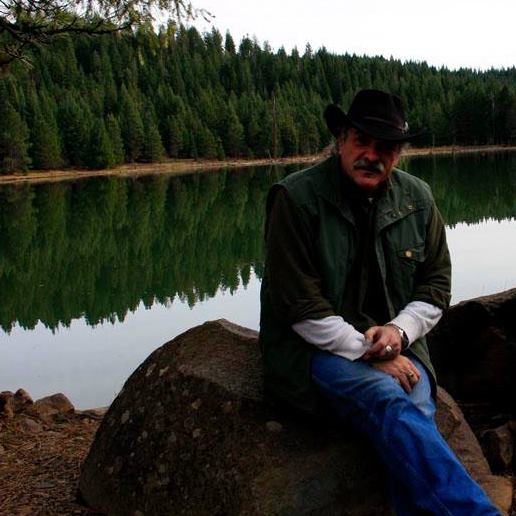
Article by
John Cox, M.A. C/M
I find bias to be a strong motive within our Wildlife Culture, developed through years of mis-guided social relevance, social-engineering actually, favoring Wildlife that is hunted / trapped and killed in reference to Sport, and other Wildlife neglected — I find this with People & Wildlife. Here I discuss Wildlife and Cognitive Science (Peer Reviews would be improved; whereas, bias and often outright bigotry in science (e.g. Special Interest Group Science for Exploitation can be detected easily, through truthful and technical perusal), within given terminology and aspect-generation of choice — i.e. Whereas, Reduce or End Sports Hunting/Trapping, or to develop our Wilderness areas for Ecological Health as a priority, rather than a forethought, or ignored in total, as I observe today.
Cognitive science reveals that bias, bigotry, and hate are rooted in the brain’s natural, often irrational, drive to categorize, generalize, and protect in groups, which can be exacerbated by social conditioning. These biases, while having roots in cognitive shortcuts for danger avoidance, can be actively managed and reduced through conscious effort, logic, and improved social norms.
Key Concepts in Cognitive Science, Bias, and Hate:
- Implicit Bias: The human mind constantly categorizes to process information, often creating generalizations that, while not inherently bigoted, lead to prejudice if left unchecked.
- Dehumanization: A critical factor in hate, where one group is viewed as inferior or less evolved, providing a rationale for bias and violent actions.
- Social Conditioning: Segregation and environment reinforce natural tendencies to categorize, contributing to the development of prejudice.
- Cognitive Mechanisms of Hate: Intense, irrational, and emotional feelings directed toward individuals or groups.
- Reducing Bias: Research suggests that using logic and conscious effort to overcome biases is key.
Wildlife and Animal Cognition Connection:
- Animal Cognitive Biases: Animals, like humans, experience cognitive biases that influence decisions such as foraging or social interaction.
- Emotional Contagion: Studies show that birds, like ravens, display emotional sensitivity and judgment biases, similar to human emotional,, subconscious processes.
- Peak Shift Effect: Research, including in bumblebees, shows that learned behaviors can create shifts in perception, creating a model for understanding how biases form.
- Speciesism: Humans often exhibit an instinctual, and sometimes unjustified, superiority toward their own species, which can lead to indifference to the suffering of others.
Scientific Approaches to Understanding Bias:
- Neuroscience and Brain Mapping: Brain imaging is used to understand the neural foundations of implicit racial bias, allowing researchers to study biases without relying on self-reporting.
- Debiasing Techniques: Scientific methods, such as randomized control trials and double-blind studies, are designed to minimize the impact of human bias in research.
Conclusion:
Cognitive science demonstrates that while humans are wired for categorization and the development of biases, awareness and conscious, logical intervention can mitigate the effects of bigotry and hate. The time for Special Interest Groups, must come to an end. Our Ecological Habitats, which directly effect our over-all environment we all must live within, will be too harsh to breath the air, or drink the Water — as we all acknowledge, upon this planet in order to survive, we must locate water – good air to breath – a source of food and replenishment – and shelter. This is the very basis of Life upon this planet, as well as in America.
Myself and others here, are now approaching these endeavors, within a Cognitive Scientific & Nonscientific approach toward Wildlife Management, as should be, and should have been done years ago. The fact that a supposed $-Billions of dollars in taxpayer money as well as some obscure situations with paying taxes for outdoor activities, also going to Wildlife Management, I find it very cumbersome, that when we review the statistics, that only 2.4% of all of these supposed funds go to actual Wildlife Management, i.e. from State to State as well as Federal. The entire Landscape of Wildlife Management Needs Changed — From country, to State, to Federal.” — John Cox, M.A. C/M
 Preservation of America's Wildlife