Author: Photographer — Journalist

  • THE DEATH OF THE WILD HORSES – WRONG PERCEPTIONS DANGEROUS

    moon_horse_by_ileva21-d4dhi8t“The very people we made laws to protect the Wild Horses from, have somehow become the decision makers on the absolute management of our Wild Horses.” — John Cox

    It is unfortunate we, as a society, have learned to accept things. Essentially this means we have learned to look the other way. Today many people look the other way in the matters of America’s Wild Horses. To those that do, many other people find their excuses profound — and why join such endeavors as BLM management situations, roundups, or PZP scams on the public and worse, on America’s Wild Horses. All this built on false premise and lies!

    Those people supporting the Wild Horse travesty, along with the welfare ranchers and others who take part as well, their excuses given for abusive behavior toward America’s Wild Horses as if it saves them. In reality it does no such thing. In reality it is death to many Wild Horses, then onward to extinction – and just plain wrong. History books will make this clear to all in the future, and will separate those that were Sheeple and followed with tawdry excuses and lies while merrily watching horses go to slaughter or die – compared to those of us who attempt to stop such activity.

    HORSES AND PERCEPTIVE DESIGNATION

    Wild Horses are not a designated species, other than being a horse. Horses of this breed mixed with that breed, so we are led to believe, develop a pecking order of priority, of wants, of best horse versus worst horse scenarios, which remain nothing more than perceptions. This is also why we have such difficulty establishing Wild Horse’s as distinct species, in order to protect them. Perceptions very significant, but some perceptions extremely negative, not noteworthy and untrue, as this particular discussion will Show beyond a doubt.

    The best examples in specific breeds simply establish conformity (more involved but kept simple within this discussion and counterpoint) to communicate the type of horse an individual may want or own by purchase, and indeed pay the price for the lineage.

    Once again perception is everything here; thereby, we have not acquired specific distinctions other than a loose and non-distinct paraphrasing of specific horses and amounts “sold as” defined. Not so ironic, the price of a horse brings about its distinction, its overall use, or indeed the outstanding Priority as a horse . . . a priority to save or discard . . .

    Bring up the subject of Wild Horses on Public Lands (non-distinct) – no one quite sure how to explain, but by golly they will tell you all about it in several thousands of words or more, and you will leave even less educated, and often worse, sorry that you even brought the subject up.

    Point: Oddly suspect, most welfare ranchers will call Wild Horses worthless and simply promote the slaughter of them all –

    Counterpoint: Those knowledgeable about Wild Horses, with no vented monetary or land interest, will be truthful and explain the necessary contribution the Wild Horses make to our Public Lands, and indeed do not consider Wild Horses worthless what so ever.

    Now we get into the dangers of the classification as non-distinction, which is other than for commercial value. And here is where we take off into the beyond – suddenly there is such a thing as acceptable animal abuse, an ironic acceptability of deranged methods toward the roundup and slaughter of horses; an almost psychopathic need for aerial roundups or trap and bait of America’s Wild Horses, and the all around distinctive rearrangement of the term “Humane . . .” –

    In reality there is no need for these endeavors what so ever – and in reality Humane remains definitive, unchanged, with only perception and those who promote false perceptions agree to any form of acceptable abuse! i.e. BLM, DOI, Welfare Ranchers, WH&B Board, BLM Supporters —

    “. . . There is nothing “cowboy” about being smart, and ignorance in perception turns into a very dangerous situation.”

    The term I use is “old west ubiquity” – which is an extremely bias belief, a worn out perception of a belief, that what matters to those supposed self-claimed “old western cowboys – ranchers” in what makes-up a good horse is all that matters, and that these “old western cowboys – ranchers” set the standard everyone else should live up to in the matter of horses. This is very wrong and over time we can see how wrong it is, through experience; we can actually see what the problems are and what the remedy or resolution can be.

    “One of the problems with Wild Horse Management today by the BLM and WH&B Board, is the fact if you have to lie, generate profound misinformation, or refuse to answer significant questions, then something is wrong. It is not an Advocate problem; it is a Person-telling-the-truth-or-not problem. Is this concept difficult to understand? No, it is not.” — Dan Gregory Fitzgerald, NSA Government Employee Oversight, Retired

    A large part of what is wrong in Wild Horse Management today, is directly related to the antiquated and ignorant belief systems, which remain extremely bias, that has been around for to many decades — “old west ubiquity” – sadly our government employee’s ignorant as well, often showing buffoonery and incompetence in the simplest of tasks within any type of Horse Management. Their bias toward Wild Horse Management related to special interests only, remains much more extreme.

    Then there are those that exist that know better, and knowledgeable about such things as being “Humane” and being knowledgeable in the matter of Wild Horses – the non-commercial values of such endeavors. We have no special interests or no payroll, nothing but good old fashioned honor, integrity, ethics, and experience at good horse management principles.

    The Wild Horse and Burro Act of 1971

    Of course the discussion on such matters as truth, ethics, perceptions, and ignorance cannot go further without an all inclusive comment on the WH&B Act of 1971.

    Rather than dwell in the legalities, let’s ponder the ideology of why the WH&B Act of 1971 come into creation. The law passed Congress unanimously at that time, with American’s supporting it unanimously as well. Here we also delve into ethics and the truism of the term “Humane” and not the fractured particles of being somewhat Humane via a supposed well-managed application of Acceptable Abuse.

    The overall value of the ethical standard of the WH&B Act of 1971 was a truism, and why the Act passed unanimously, was that very few cowboys – ranchers actually knew how to handle, or knew about America’s Wild Horse’s at all, other than their presence on Public Lands — as their continuous ineptitude and scornful bias overlapped any type of common sense or moral standard what so ever.

    “Most people who have been placed on the Wild Horse and Burro Board are like-minded in the fact that cattle, sheep and rangeland take precedence as an ultimate priority – the fact and truth is special interest over-rides everything else, and over America’s Wild Horses on Public Lands. There is no diversity on this board what so ever, profound but true – simply a narrow scope of thinking and combined with total ignorance toward their own lack of capacity for judgment; which, by the way has developed no wholesome management paradigms over decades, never has and never will if not changed – after all, aren’t these the very people the WH&B Act of 1971 was ratified for, to protect America’s Wild Horses from? Yes, it was.

    TODAY’S WILD HORSES IN DANGER

    American’s, and American institutions in particular, are adept at evasion and denial of suffering. Not only our government but our avenues of Agriculture, of Commerce, and of the daily consumer are all good at looking the other way.

    When did the transition of acceptable abuse come about? Some historians tell me around the beginning of the Industrial Era, and the consumerism that supported such endeavors.

    Also it was a time when people started to move from their farms and into the cities for employment, and the dream to become rich was so popular back then. While on their farms, they lived off the surrounding country-side, living with nature on a yearly basis. The aspect of their communing with nature on the farm eventually lost upon exit. Such items as horses simply become tools, animate objects for transportation, and maintained within that aspect – not of Humane Reasoning, but of utility and availability.

    Respect for nature and wildlife lost, washed away and sanitized by industry. In reality, the coexistence with nature replaced with corporate sales. When we explore the problem of ignorance, we often find the very core root of the problem starting quite simple, with innocent intention – whereas, over time it becomes quite significant, quite dangerous indeed, especially to those animals who joined the industrial work-force, where common abuse within daily management become nothing more than part of the mundane daily chore — and on it goes . . . Innocence Lost . . .

     “Internalized oppression is akin to what Freud calls the “repetition compulsion”: the reflexive impulse to inflict on others the pain that we have suffered.”

    The WH&B Act of 1971 was meant to protect the Wild Horses on Public Lands from the ranchers and other people who now populate, underhandedly, Board positions within what is now termed the Wild Horse and Burro Board, who irresponsibly Undermine the WH&B Act of 1971. Many American’s and taxpayer’s think these Board Members should go to jail. This has been ongoing for decades now, and has cost American’s not only a lot in taxpayer money and subsidies, who BLM and WH&B Board members make sure their friends and fellow ranchers receive — but has cost many Wild Horses their life, and disgustedly under unnecessary circumstances; from outright lies mostly, from that Board’s members.

    It is then compounded with the fact it was done at taxpayer expense, and taxpayer’s paid in large sums for these board members to make those decisions – irresponsible conduct, and some say even criminal conduct – and yet BLM employees, DOI employees, and others simply turn their heads and look away. Why? Because the perception remains, the Wild Horses worthless, but only to those ranchers and cowboys who are profiting over this particular perspective – Those who know better, and do not accept false-perceptions, and have well-rounded experience with horses, know the Wild Horses have not only a place in American history, as Icons of Positive Values and ethics, but a place in the very hearts and souls of American’s of every generation from the past, to the present, to the future – and for valid reasons.

    It is similar to a storyline from an old western, the good-folks (Wild Horses and Advocates and American’s) versus the Shylocks (the BLM, DOI, BLM supporters, Welfare Ranchers, and others). As taxpayer’s, we should all be extremely mad and demand a stop to all of this!”

    Not so ironic, it is all quite obvious and rather than look-away, take a look directly at the evidence – for example look at the budgets, look at who benefits from their WH&B Board decisions, look who benefits from the Bureau of Land Management decisions, look who pays for all of this (expenses and subsidies paid out, that some term highly criminal in nature), and then we all become quite knowledgeable. Then look at what the American Taxpayer receives in return for all of this money spent, and Wild Horse lives taken = 0! Had enough yet?

    KNOWLEDGEABLE DECISIONS

    The more knowledgeable people, especially in the matters of Wild Horse Herd Management, state clearly to place the Wild Horses back on Public Lands, and to leave them alone . . . No more expense of Wild Horses lives, no more taxpayer expense . . .

    The intrusion here and the mis-perception, is the term Humane being changed to Acceptable Abuse and bad treatment and death of Wild Horses, for false reasoning.

    As our society grew, and still grows, Humane Conduct toward animals and humans alike must take priority — a society must grow within a true humane structure in order to experience growth. The fact is the “old west ubiquity” was extremely abusive anyway, and needed to be changed, not admired and cloaked as a necessity for the survival of our culture. That is a lie of paramount deception, creates nothing more than destruction, and has only to do with greed.

    ______________________

    Special Note:

    [ I recently watched Trail of Tears – A Native American Documentary – It is an understatement I was appalled and disgusted of our then government with the treatment of relocating the Native American’s —

    I realized by the 2nd chapter that their redefining the term “Humane” for tolerating and stating acceptable-abusive behavior was used. And the lies abundant in regards to what they told the public.

    Why am I mentioning it here – because the same terminology, i.e. necessary roundup, need of land for the incoming population, destroying pertinent and economic priority lands, and a non-represented segment of America, among many others terms, the same.

    Government employees, BLM supporters, and other contractors – you should be ashamed of yourselves, you disgusting people! History will define what you people are doing and have done here – make no doubt about that, and it will not be a pleasant or nice history of what you are taking part in . . .
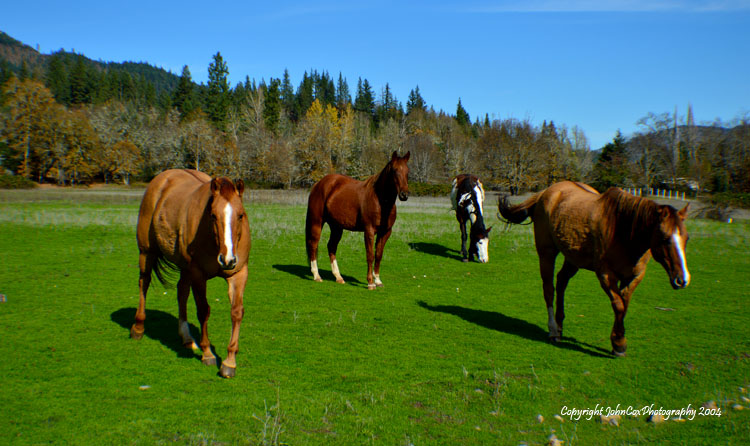
  • WILD HORSE EXTINCTION

    horses

    “Nevertheless so profound is our ignorance, and so high our presumption, that we marvel when we hear of the extinction of an organic being; and as we do not see the cause, we invoke cataclysms to desolate the world, or invent laws on the duration of the forms of life!” — Charles Darwin

    Although wildlife extinction is a normal part of evolution, human modifications to the planet in the last few centuries, and perhaps even millennia, have greatly accelerated the rate at which extinctions occur

    Habitat loss remains the main driver of extinct species, but it may act synergistically (i.e. reproduction-reduction – PZP use for example or hunting under falsified habitat population information) with other drivers such as over harvesting and pollution of habitats, and what is currently ongoing — climate change.

    Large-bodied species such as Wild Horses, rare species, and habitat specialists (unique biosphere living) are particularly prone to extinction as a result of rapid human modifications of the planet. Extinctions can disrupt vital ecological processes such as pollination and seed dispersal, leading to cascading losses, ecosystem collapse, and a higher wildlife extinction rate overall.

    SYSTEMATIC DRIVERS

    Agreement that wildlife extinction rates have increased over the past few decades is quite common, and undisputable facts exist. Wildlife extinction is from adverse accelerated habitat; profound wildlife breeding control and reduction methods (for example with PZP, the methodology more popular than being useful, and in reality has no significance other than leading to ultimate extinction); and, global expansion of the human population during the twentieth century.

    The major ‘‘systematic drivers’’ of modern species loss are:

    1. Changes in land use (habitat loss combined with degradation and fragmentation);
    2. Overexploitation such as cattle and sheep on Public Lands which are invasive species;
    3. Disease from both invasive species and non-invasive or biosphere and habitat fluctuation creating abnormal virus or germs;
    4. Unorthodox breed-control and minimizing reproductive rates exclusively i.e. America’s Wild Horses on Public Lands (i.e. PZP, et al.);
    5. Inherent inner-structural damage of family bands and herds due to interruption;
    6. Climate change  (global  warming)  connected to increasing concentration of atmospheric carbon dioxide and increases in nitrogen deposition;
    7. over-hunting, introduced predators or lack of predators;
    8. diseases, and blatant habitat destruction both human-made and invasive species introduced negligently . . .
    9. BLM erroneous horse counts contributes to “closure rates”, as it is estimated that, e.g., cattle and sheep on Public Lands outnumber the wild horses – 10.6 : 1 ratio, and after discussion find it to be the minimum average, a much higher average, according to scientific estimation and a ratio more in-line with cattle and sheep populations on America’s Public Lands is 38.4 to 1 ratio.

    A key-element here:  Ultimately, any phenomena that can cause mortality rates to exceed reproductive-replacement, over a sustained period, cause species extinction.

     EXTINCTION DRIVERS

    Some events instantly eliminate all individuals of a particular species, such as an asteroid strike, a massive volcanic eruption, or even a rapid loss of large areas of unique and critical habitat because of deforestation, or invasive species which leads to the actual destruction of habitat, then to species.  Many examples, here are two:

    1. The Rocky Mountain Sheep placed on Mount St. Helen’s months before the mountain erupted, a good example of this area-extinction development.
    1. The introduction in 1996 of PZP within the Wild Horse population on Public Lands, then redefined, upon past use – then used currently to lead the way for Wild Horse population extinction, and promoted under false pretense and use . . .

    In reality, many forces contribute toward habitat loss which leads to extinction, in the Wild Horse case — a build up of cattle and sheep on Public Lands, with extreme ratios of cattle and sheep compared to horse population.  This will cause extinction of the wild horse directly, for several reasons. Then we compound the situation with reproductive reduction in breed-controls . . . or what is termed Reduction to Extinction.

    In our case scenario here, the BLM not only removes many of America’s Wild Horses, but plans have been discovered, over time, that the BLM, along with the Department of the Interior and the Wild Horse and Burro Board are all, along with many of what is termed Welfare Ranchers and miscellaneous corporations — will be responsible for the absolute extinction of America’s Wild Horses off of America’s Public Lands – despite what American’s want.

    The BLM, along with their contractors and special interest groups, manipulate material and data favorable only to these special interest groups. They communicate to the public with lies and innuendo; which, equates to misinformation to the public.

    This, in reality, is to promote the liquidation via reproductive-reduction of Wild Horses the extinction process, rather than a population-control process, as promoted, toward longevity of wild horses — which is the outright lie . . . as well as a tremendous amount of taxpayer money spent for such criminal behaviors and conduct – Creating fraudulent budgets based on lies and misinformation is illegal after all . . . and many question why this criminal behavior is ignored. . .

    In summation:  BLM and DOI, via Special Interests at taxpayer expense, facilitate the establishment of an invasive  species (cattle and sheep) by using a registered Pesticide (PZP) — given to Wild Horses under the status of “Pest” – and this registered Pesticide agent is used for Reproduction Reduction Process = Extinction, and is also an agent of questionable use and very questionable history due to lack of any quality research methodology.

    As a result, any one of these process agents can and does cause a population to dwindle. Ultimately to predispose this same population, in this case America’s Wild Horses, to a zeroed-out population = EXTINCTION!

    POPULATION DECLINES

    Irrespective of the reason for a population’s decline from a large to small population size, there often are unusual and detrimental events, causation from low horse population, for example.  Good science combined with quality data gathering and information, and sound translation from that data show us the reasoning for low wild horse herd size:

    1. Due to invasive species i.e. cattle and sheep;
    2. Continuous reduction in horse herd and horse band size due to roundups, bait and trap site roundups;
    3. Stealing or commingled theft (by contractors and government employees et al) of wild horses and taking them directly to slaughter;
    4. As well, the heavy false promotion and awkward at best use of the Registered Pesticide PZP for direct Reproductive Birth-Rate Reduction in the wild horse herd populations over all.

    (PZP – A Wildlife Breeding-Control Agent is a pesticide which many try to call a Vaccine in order to persuade others it is okay to use on Wild Horses on Public Lands. with the outright and obvious intent of making it sound harmless;

    This term seriously erroneous and PZP is a Registered Pesticide with the EPA, and as an EPA agent stated clearly, “. . . PZP is not a vaccine, as it fulfills no terminology or process elements to qualify . . .”

    Promotion toward a mere and wholesome population-control of Wild Horses is misinformation at best — PZP is inconsistent and leads to extinction . . .

    *The fact is PZP reduces reproductive rates in America’s Wild Horses – and as good science tells us, creates a decrease in Wild Horse population by lower reproductive-rates in many mammals.

    **The fact is PZP speeds-up what is termed a “closure-rate.” When using good science and good research derived from a thorough data base, this equates to Extinction of America’s Wild Horses – Beyond any doubt!

    Allee Effect

    Although competition among individuals is reduced at low densities and can induce a population rebound, a counter-phenomenon known as the ‘‘Allee effect’’ can also act to draw populations more so toward extinction by (for instance) disrupting behavioral patterns, which depend on numbers (e.g., herd defense against predators; genetics and available learned characteristics, for example to establish firm survival skills from aged horses, et al.); or by genetic threats such as inbreeding depression.

    Small populations, where most of the wild horse herds are at currently – very low non-viable or near non-viable numbers per herd/band, if dominated by chance events combined with the Allee effects, are often considered to have dipped below their ‘‘minimum viable population’’ size.

    Thereby, debate toward compensatory effect, or the Allee effects due to small herd size no longer is a viable deduction what so ever – due to so many other infringement processes conducted on the wild horses while on their designated lands by Law; also, due to the inconsistent Registered Pesticide PZP throughout its history.

    But many researchers and others surmise its use, and believe the inconsistent results were known, and to the effect toward a quasi misinformation campaign to promote the Registered Pesticide as a useful anti-reproductive process for the control of wild horses – or in truth of the matter the process to extinction of America’s wild horses . . .

    Yes, the truth is nothing more than a known lie by those who wanted the wild horses destroyed completely in the name of being a nuisance or pest, and with no redeemable characteristics what so ever – this equates to judgments based on unsubstantiated data, which equates to hatred toward wild horses – your tax money being used under false pretense by government agencies catering to special interests!

    Thus, once a major population  decline  has  occurred  (from  habitat  loss, overexploitation, or in response to many other possible stressors), an ‘‘extinction vortex’’  of  positive  feedback loops can doom species to extinction, even if the original  threats  have  been  alleviated. Further, many species may take decades to perish following habitat degradation, but with so many stressors the wild horse herds confronted with and attacks on them now weekly, and their low numbers, extinction is eminent.

    Although some species may withstand the initial shock of land clearing, factors such as the lack of food resources, breeding sites, et al that disappear, makes populations unviable, and they eventually succumb to extinction as well. This phenomenon evokes the concept of ‘‘living-dead’’ species, or those ‘‘committed to extinction.’’

    Categorically right now the America’s Wild Horses are, by many government agencies, supporting as a priority the “Living Dead” paradigm – as seen by the ignoring of public response and completing the tasks of the Stressors outlined above, undaunted. . .

    The eventual loss of such species, as wild horses on Public Lands  is referred  to as the ‘‘extinction  debt’’  caused  by  past habitat  loss.  For example, even if net rates can be reduced or even halted, the extinction debt of remnant and secondary lands patches will see the extinction of countless remaining species over this interval.  We can now speak more about the attrition situation, other than the wild horse dilemma, and acknowledge our government’s attempts at ridding America’s entire Public Lands of many more animals, or even a priority toward all wildlife . . .

    EXTINCTION VULNERABILITY SCIENCE

     Certain  life-history along with behavioral,  morphological,  and physiological characteristics appear to make some species  more  susceptible  than others to the  extinction drivers described above. In general, large-sized species with a restricted distribution that demonstrate habitat specialization tend to be at greater risk of extinction from human’s, more so than other stressor’s within their respective Taxa, especially to processes such as rapid habitat loss combined with reproduction .

    Because of their high habitat specificity and/or low population densities, rare species may be more prone to extinction than common species. The size of a species’ range is  also  a  major  determinant of its extinction proneness. Small ranges may make species more vulnerable to stochastic perturbations, even if local abundance is high; for example, proportionally more passerines (perching birds) with relatively small geographic ranges.

    Such trends are worrisome because those species with shrinking ranges as a result of adverse human activities become particularly vulnerable to other drivers, such as climate change. Habitat loss also reduces the patch sizes necessary for species requiring large home ranges, making them vulnerable to extinction from a loss of sub-population contentedness, reduced dispersal capacity, and the ensuing lower population viability.

    Larger-bodied vertebrates are considered to be more extinction-prone than smaller bodied ones when the threatening process unfolds rapidly or intensely. Indeed, threatened mammals are an order of magnitude heavier than non-threatened ones.  A common explanation for this trend is that body size is inversely correlated with population size, making large-bodied animals less abundant and more vulnerable to chronic Environmental perturbations (while being buffered against short-term environmental fluctuations).

    The extinction proneness of large-bodied animals to human activities is further enhanced because of other correlated traits, such as their requirement of large area, retarded food intake, high habitat specificity, and lower reproductive rate.

    CONCLUSIONS

    Beyond a doubt, all of the above lead America’s Wild Horses to Extinction.  And the government employees, contractors, and Registered Pesticide PZP promoters are guilty also . . . despite their ongoing misinformation to the public and taxpayer’s alike.

    Those who debate these facts, such as those who make their living accepting grants or government contracts and adhere to what they call acceptable practice, while using the Registered Pesticide PZP on the Wild Horses, also have as much vented interest as do welfare ranchers, BLM, DOI, and corporations who make money off the occasion and off of America’s Public Lands.

    The bottom line is they are being subsidized via antiquated laws while doing so, lying and distributing misinformation to the public. The best example is the overly estimated Wild Horse populations on America’s Public Lands and given to the public by BLM . . .

    Many questions need to be answered, especially from the BLM, the DOI, and the WH&B Board themselves. These organizations hide the truth, or simply give the public outright misinformation and often lie. The extinction juxtaposition of much of American wildlife, directly involving significant links, for example wolves, cougars, and other predators that provide reforestation and environmental enhancements simply by their inhabiting a particular area, are much less active right now, and nearing extinction as well.  This is becoming more noticeable within our environmental crisis as well, and for many reasons.

    But there is one more note of interest to be developed here, that is of expense – how much has the taxpayer paid in order to pave the way in making Wild Horses Extinct – and why, when they can get along well enough on Public Lands, without any problems at all due to the sheer number of land-size compared to wild horse herd size – other than those made up problems and by 100% of those who profit vastly on Taxpayer money, in the billions now yearly, and the Taxpayer receives = 0 (that is Zero Folks) Nothing!

    ___________________________

    Glossary of Unique Terms American’s and Taxpayers Should Know:

     Allee  effects. These  factors  cause  a  reduction  in  the growth  rate  of  small  populations  as  they  decline  (e.g., via reduced survival or reproductive success).coextinction. Extinction of one species triggers the loss of another species.

    extinction debt. This refers to the extinction of species or populations long after habitat alteration. extinction vortex. As populations decline, an insidious mutual reinforcement  occurs  among  biotic and abiotic processes driving population size downward to extinction.

    extirpation. This refers to extinction of a population rather than of an entire species.

    invasive  species.  These are nonindigenous species introduced to areas outside of their natural range that have become established and have spread.

    megafauna. This refers to large-bodied (>44 kg) animals, commonly (but not exclusively) used to refer to the large mammal biota of the Pleistocene.

    minimum  viable  population. This is the number of individuals in a population required to have a specified probability of persistence over a given period of time.

    *** Ironically, and with the use of up to millions of dollars of taxpayer money over the years, the Wild Horse and Burro Board was developed by a congressionally voted upon (unanimously at that time) Law, to safeguard America’s Wild Horses.

    *** Ironically again, this WH&B Board (i.e. contrary directly to Law) indeed does not and has not for quite some time protected the Wild Horses on Public Lands what so ever.

    ***A perusal of the WH&B Act Law and the WH&B Board decisions (Board Meeting Documents over the years) demonstrate this to be a fact, and in accord with the Bureau of Land Management and the Department of the Interior’s blessing, have indeed spent millions in taxpayer money illegally, as well as violated consistently the Wild Horse and Burro Act – also a unanimously and Congressionally voted upon Law which demonstrated the will of the majority of the American people when done . . .

    *** So what started out to be a safeguard for America’s Wild Horses, was corrupted decades ago, and was infiltrated with people from the areas the Wild Horses and Public Lands in question were to be protected “From”!  PROBLEM!

    *** Ultimately, and well referenced, the WH&B Board decisions based upon getting rid of, or classified as on the road to Extinction, and via a loosely configured time element, all of America’s Wild Horses taken off of America’s Public Lands – Preferred Methodology = EXTINCTION – conducted with Invasive Species X Reproduction Breed-Control (i.e. PZP-Registered Pesticide)!  THE SCAM!

    References:

    Brook, Barry W., Navjot S. Sodhi, and Peter K. L. Ng. 2003. Catastrophic  extinctions  follow  deforestation  in  Singapore.  Nature  424:  420–423.

    Clavero, Miguel, and Emili Garcia-Berthou. 2005. Invasive species are a leading cause of animal extinctions. Trends in Ecology and Evolution 20: 110.

    Dirzo,  Rudolfo,  and  Peter J.  Raven.  2003.  Global  state  of biodiversity and loss. Annual Review of Environment and Resources 28: 137–167.

    Fagan, William F., and E. E. Holmes. 2006. Quantifying the extinction vortex. Ecology Letters 9: 51–60.

    Koh,  Lian  P.,  Robert  R.  Dunn,  Navjot  S.  Sodhi,  Robert K. Colwell,  Heather  C. Procter,  and  Vince  S.  Smith. 2004.  Species  co-extinctions  and  the  biodiversity crisis.  Science 305: 1632–1634.

    Pimm,  Stuart  L.,  and  Peter  Raven.  2000.  Extinction  by numbers. Nature 403: 843–845.

    Pounds,  J.  Alan,  Martin  R.  Bustamante,  Luis  A.  Coloma,

    Jamie A. Consuegra, Michael P. L. Fogden, Pru N. Foster, Enrique  La  Marca,  Karen  L.  Masters,  Andres  MerinoViteri, Robert Puschendorf, Santiago R. Ron, G. Arturo Sanchez-Azofeifa,  Christopher  J.  Still,  and  Bruce  E. Young.  2006.  Widespread  amphibian  extinctions  from epidemic disease driven by global warming. Nature 439:161–167.

    Ricketts, Taylor H., Gretchen C. Daily, Paul R. Ehrlich, and C. D. Michener. 2004. Economic value of tropical forest to coffee production. Proceedings of the National Academy  of  Sciences  U.S.A.  34:  12579–12582.

    Rosser,  Alison  M.,  and  Sue  A.  Manika.  2002.  Overexploitation  and species  extinctions.  Conservation  Biology  16:  584–586.

    Sekercioglu, Cagan H., Gretchen C. Daily, and Paul R. Ehrlich.  2004.  Ecosystem  consequences  of  bird  declines.  Proceedings of the National Academy of Sciences U.S.A.  101: 18042–18047.