Sustainability: The ability to be maintained at a certain rate or level; or, Avoidance of the depletion of natural resources in order to maintain an ecological balance.
Let’s, together right now, separate the confusion between ideologies, directly related toward sustainability of Americas Wild Horses! Due to these differences and among so much confusion on what exactly sustainability is, and what it is not – Oh yes, need we not forget and among all of the confusion these days, government employee ignorance compounded with their lies and outright corrupt behaviors – from Bureau of Land Management mostly, with Oversight from the Department of the Interior, overwhelms America’s Wild Horses on America’s Public Lands and Forestry Lands.
The reality of their ignorance? Wild Horses Die! But not just die, but die throughout a morbid, abusive death at slaughter plants. The horse’s throats ripped out, or cut open by a knife, or beat in the head with a hammer until unconscious, then gutted when still alive. . .
And yet, this information is not unknown to those government employees who support, or take part in stealing wild horses for slaughter, mostly by creating horse counts that are biologically impossible for mother nature to create naturally (bogus statistics and dishonest research shadow all of their efforts throughout their corruption). It does not matter how they smile when talking to the general public. The reality? They know nothing of horses in general, and know even less about Wild Horses – America’s Wild Horses.
To write this one has to enter into a gloomy realm of darkness, which is the domain of falsified wild horse herd counts. We see firstly, the wild 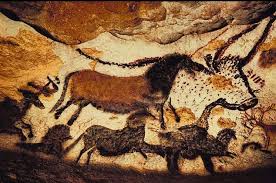 horse counts done by Bureau of Land Management employees to be, very often and as stated above, biological impossibilities. Exaggeration of a type where, in reality, abusive behavior and harm does come to the wild horses – through what we can term sociopathic behaviors. Yes, they know what happens to the horses when sent to slaughter, make no doubt they know, and simply do not give a damn what so ever.
Also forgotten is the legal aspects of what they do, daily – corruption of falsification laws, corruption of laws that protect the public from government lies and fraud, and basically do not manage the wild horses at a level of knowledgeable professionalism at all. Corruption is exactly the name of their behavior – disgustingly, for nothing more than pocket change and special interests.
The horses lose, and sustainable wild horse herds are obviously planned toward “Extinction” and within the coming decade, contrary to Law. And by the way, for no reason other than short-term monetary profits for all involved – most often from taxpayer money and corrupt subsidy programs or grants provided by our government.
Sustainability Organization and Perspective
Let’s just agree from the outset, there are so many different oriented perspectives within the matters of sustainability, one can become confused as to just why there exist so many. We have one Earth, with our unique environment that separates our planet from so many others within our solar system.
Many of us also understand the simple facts of an All-Is-Connected mind set, and with this we can understand further, that simplicity can lead to such intricate detail, abound with such a complexity in process, that it becomes far easier to give up, rather than dwell within our landscape upon this planet for any amount of time; thereby, many people simply follow large special interest groups, rather than deduct for themselves the environmental circumstances that do exist.
The problem here? Special interest groups (along with government agencies as well) that say they do the research — but in reality, do not. This situation equates to the worst type of ignorance. Most people will just agree with the information that sounds the best, comparable to comfort-food is comfort (false) facts, which in truth is nothing more than to participate within the ignorance, and have no idea about the realities, and often wonder why nothing has changed over the past decade.
Understanding Sustainability and Nature
Aldo Leopold understood this hierarchical organization of our overall environment, along with all of its complexity. He understood not just the natural systems existing throughout his time but the impact of humans on them, and severe potential destruction in the future inevitable.
We can peruse his more significant writing of “Think Like a Mountain”, and realize that managing a species population on the mountain (i.e. ecological zones) requires a systematic approach, rather than guesswork, or narrow perceptions that include special interests, or even economic interests. Many of us agree, Leopold did not go far enough, and it is now up to us to go further.
 Only then we can also understand the complex nature of the subsystems he spoke of – i.e. deer, wolves, and hunters etc., and when manipulated for human purposes, (in this example by removing the wolves entirely – which we can define parallels with our nations Wild Horses, due to the blatant ignorance of hatred toward both species, that some human’s do maintain, falsely, as their perception of true sustainability or their brand of (fake) conservationism) would alter those corresponding ecological systems drastically, if not destroy them entirely.
Ignorant human involvement within nature, can devastate our planet, make no doubt as those of us in the field see it daily now – even more so than nuclear bombs, and far more dangerous than our perception of nuclear war, which would probably never happen – Perception compounded with commercialized manipulation is quite extraordinary at times, is it not? Ignorance can be far worse than any war, and profoundly justice never accomplished to fix the corruption.
This develops into an awkward situation, that when set in motion cause significant changes to our overall environment. And human’s, well, we simply want to ignore what has developed, despite the destruction, and move on to our self-indulgence or special interests – in this case hunting for deer, or Elk, or the commercial and industrialized cattle production of beef (even though we see a 34% to 36% amount of beef products thrown-away (i.e. USDA Statistics 2000 to 2016) wasted or thrown out for non-sales at markets yearly, and the hell with any other wildlife. . . A corrupt industry in total, similar to many others that use our natural resources or ecological systems, to produce their saleable products, in such mass commodities. . .
Within this discussion a profound economic sustainability ideology does exist; but, up to this point in history, time has shown this particular wayward ideology very destructive, indeed.
We can go to other circumstances, especially within the cattle industry, which provides us with reasoning as to why so much ignorant-styled hatred toward wolves and wild horses does exist. A good example is how our government, to be precise the Bureau of Land Management (BLM), portrays our nation’s Public Lands mass and acreage, as all of it being pristine, or useable.
This is an untruth. There exist small areas, or ecological systems that are useable, but mostly shared by many species. It is this sharing of these lands, by a diversity of species (Yellowstone for example and proven by much of the research over the past four-decades, that shows this very well indeed; or, the Great Plains, that shows us diversity up to three-decades ago, then the devastation and destruction, by cattle mostly) that provided the enhancement of the overall ecological system to work beneficially.
Research also shows that the amounts of Public Lands is exaggerated (covered in my previous writings). This becomes devastating when we see cattle ranchers fight over Public Lands and Forestry Lands, to place their cattle upon (cattle destroys ecological systems and overall environmental habitats, robustly proven over decades of research), and since government agencies acreage-counts exaggerated (also proven by sound research, with so many conflicting statistics between USDA/Forestry as well as BLM or USGS for that matter, among others), then the fight for useable Public Lands / Forestry Lands, and land mass itself, becomes of paramount significance to us all, especially within a sustainability context.
These useable ecologically healthy land-masses, that also include diversity in wildlife and vegetation, are called “Islands”, for research purposes. This distinguishes unusable land-mass from useable, or over-used land-mass in a real-time data gathering sequence of attributes and study. Using this methodology, we can now distinguish the false representation of land-mass, with a truer perspective of how we treat and use our functional land-mass – and I must say it is not a pretty picture what so ever. – John Cox, Cascade Journal
Now we can begin to see how Leopold, in “Marshland Elegy” and the way he used, or constructed his multiscale critique of his Wolf Policy, in “Thinking Like A Mountain,” is so important, but still did not go far enough to protect sound Ecological Zones from economic reasoning, or disastrous mind-sets, from several very destructive commercialized situations (cattle, oil, mining, pipelines, exploratory drilling for gas, et al.).
One can also make a good point in the fact of negative sustainability, especially within the economic standard of false ideology of the term  sustainability and within the aforementioned industries. Frankly, one can replace their economic ideology, or perceptions, of sustainability with more unstable principles of conduct, or negative virtues of reality – which dictate using the lands aggressively to sustain the current population, until unuseful, then leave it for the future generations to deal with the overall burden, and on their time, not ours.
None the less, we deal with ignorance. Why do I say this? Because we can reflect back into a past that remains abundant with information. This information shows us, beyond any doubt at all, whether it be hierarchical models, or simply multiscale models, that prove humans pay attention to only short-term profits (i.e. short-term land use, or aggressive ecological devastation and then move onward to another healthy ecological-zone (Island) to devastate short-term) . . .
Thereby, the problem in real time, becomes that of these same driving variables of destruction, and in a system of economic gain, can and does undermine these ecological systems, and sadly, within an ignorant context, wildlife species driven toward extinction; which, overall contributes to the system’s ability to not continue to provide those outputs, and actually undermine those dynamics that function at a much larger scale.
Sustainability and Positive Approach
Here is where we can take Aldo Leopold’s reasoning to a protohierarchy theory. This is where it gets interesting, as one does not want to aspire toward a juggling-act. We find that politics eventually takes over any type of superficial context based upon falsehoods or self-oriented special interests. We see a lot of this within horse advocacy groups (and government agencies alike, as currently neither is that far apart in the matters of bogus information and spreading it to the public at large), where analysis based upon false-hoods, or corruption taken as a truth, becomes simply yet another superficial layer that can essentially be tossed upon the already immense garbage-pile of other ignorance portrayed as reality.
So we can dig-up truth, despite so much garbage, through quality process dynamics, for example:
- Systems embedded within one another, given the smaller sub-systems are expected to change quicker than the larger systems that they are composed, to maintain the space-time relationship complex all the while sustaining the dynamics of the entirety, or the whole system as being dynamic, enhancing both the ecological system as well as the diversity of species that contribute;
- All observation as well as research, be confined with information from these sub-systems only, assumptive toward the aggressive dynamic that enhance, rather than hinder, the complex of the relationships favoring sustainability and longevity of the overall dynamic in its entirety. No appeals are made toward any other perspective of ideological enhancement of what sustainability is or is not; whereas, special interests remain uninvolved and prohibited.
Within the two points made here, from experience many of us can perceive an infinite amount of systems that can be used, where sound and quality research is provided, then becomes a priority toward management, despite what level the system or ecological zone for that matter. Here we can provide the human elements with natural elements judiciously and without special interests or government intrusive and wayward corruption having the ability to take over and destroy further, these lands (or Islands) upon which the taxpayers and public, i.e. American’s Own. We can also expect more from the laws that already exist, yet ignored by those government entities that are, indeed, paid to uphold those same laws they ignore.
The situation here is to have the ability to develop models that arrange many dynamics, that can come together, that actually drive this system into positive areas of understanding; whereas, this allows those involved to parse problems onto the systems, and systems onto problematic areas, or zones, in helpful ways – when compared to the current, and destructive, economic ideologies of fake or false sustainability perceptions – and those that attempt to work within those false perceptions, which equate to no change or no positive situations to develop toward land-mass or ecological-zone improvements. . .


 Preservation of America's Wildlife