
“Conservation is getting nowhere because it is incompatible with our Abrahamic concept of land. We abuse land because we regard it as a commodity belonging to us. When we see land as a community to which we belong, we may begin to use it with love and respect.” ― Aldo Leopold
Ya know, when we discuss the improprieties of the Bureau and Land Management (BLM), or the Department of the Interior’s (DOI) bad management, administration, and waste of taxpayer’s money, we are not discussing a Conspiracy. Nope, we are discussing their bad decision making; which is compounded by bad financial choices; which is directly attributable to vented and special interest group appeasements; which is directly attributable or manipulated by political agenda’s. Also often based on bad science and research as well as manipulated data, as the excuse to the public for the obvious costly and awkward decisions made . . .
The problem is — rather than frugal or legitimate scientific-based decision making, America’s government agencies have been invaded by corporations and non-profit groups with narrow special interests only. This is a big problem within our wildlife and environmental community because of this situation. The result is bad decisions, wasting life and lands follow.
After all, American’s pay for legitimate Environmental and Wildlife decisions based on “Good Science” – which by the way is the Department of the Interior’s Mission Statement as well as it’s subordinate government agencies (note: taxpayer’s pay research scientists maximum amounts, which supposedly attracts the talented people – sadly, who can be paid off as well). So why on Earth do they not do this?
When I speak about scientific research of our environment and wildlife, I speak of legitimate research. This includes knowledgeable aspects, by the researchers involved, of proper data gathering (i.e. explained within the technical report within the how-to section), the fulfillment of the data gathering (i.e. also explained within the technical report’s, and along with difficulties in some instances), non-subjective research and perusal of the data gathered, which culminates in the technical report presented to the public — an honest overview of the data and what it means. . . Any other type of research is and remains unqualified to become trustworthy information to make legitimate decisions upon.
IN THE MATTER OF WILD HORSES AND WOLVES (the wild horses information an added highlight within the data gathering in most of these reports):
The following study involved 42 Scientific reports–of quality, and throughout the USA and other countries and involving Large Predators’, e.g. horses, wolves, bears, et al. . . in the Wild. . . :
“These issues do not just affect the United States and a few national parks,” said William Ripple, an OSU professor of forestry and lead author of the study. “The data from Canada, Alaska, the Yukon, Northern Europe and Asia are all showing similar results. There’s consistent evidence that large predators help keep populations of large herbivores in check, with positive effects on ecosystem health.”
American’s have to ask the big questions of our Legislator’s, and to our government agencies. With all the scientific data, and technical reports stating Predators in the wild are needed, then why in the hell does our government agencies support the withdrawal of some predator’s from the Endangered Species List, to be hunted and killed – this at the sake of our future wildlife, our future environment, and at an extremely high cost to taxpayers?
Well, the answer obvious – Welfare Ranchers distribution of false information and outright lies about America’s Wild Horse Herds (Big AG involved as well with their Lobby demands); Non profits such as the Safari Club International that wants to do nothing but kill endangered species, to include wolves, to brag and mount them on their living room or office walls, so they go along with the lies of the welfare ranchers in the US; Then we have Big AG, that since the decline of beef use, want to place more cattle onto Public and Private Lands for foreign sales, and to hell with the upcoming destruction of America’s lands and to hell with the public at large when profits are involved. The same with oil interests, mining interests, and energy interests.
Oh, there exist no humane or human interest listed here! That is because that simply no longer is of value or counts as far as our current BLM or DOI are concerned! Disgusting, isn’t it!
Good Science Clear
In ecosystems around the world, the decline of large predators such as lions, dingoes, wolves, otters, and bears is changing the face of landscapes from the tropics to the Arctic – but an analysis of 31 carnivore species (published in the Journal of Science) shows for the first time how threats such as habitat loss, persecution by humans and loss of prey combine to create global hotspots of carnivore decline. At the same time we see a decline in the overall environment as well as the smaller ecological systems dependent on all animal and plant species within these unique systems.
More than 75 percent of the 31 large-carnivore species are declining, and 17 species now occupy less than half of their former ranges, the researcher’s reported within their technical papers. Hunt clubs and non-profits look forward to killing these now limited species for trophy and bragging rights; Animal Advocates and Environmentalists see this statistical data and frown, concerned over the loss in the “Chain of Life” circumstance, and sadly acknowledge more will be lost than the obvious; the human spirit and soul of animals and humankind alike will be lost also.
It is clear, due to several reasons, to include the arrogance of our government agencies in cooperation with such groups as the Safari Club and other hunt and caged-hunt situations that Southeast Asia, southern and East Africa and the Amazon are among areas in which multiple large carnivore species are declining quickly. With some exceptions, large carnivores have already been exterminated from much of the developed world, including Western Europe and the eastern United States.
“Globally, we are losing our large carnivores,” said William Ripple, lead author of the paper and a professor in the Department of Forest Ecosystems and Society at Oregon State University.
“Many of them are endangered,” he said. “Their ranges are collapsing. Many of these animals are at risk of extinction, either locally or globally. And, ironically, they are vanishing just as we are learning about their important ecological effects.”
Subjective Reasoning a Danger to America’s Wild Life
Ironically, the fact that an animal is endangered is of no consequence today. Again, we see such organizations as the Safari Club International and other hunt clubs and guided services, to receive permits to “Kill” animals on the Endangered Species List; yes, even to extinction.
There also is evidence, through legitimate scientific research, that document impacts of Cougars and Wolves on the regeneration of forest stands and riparian vegetation in Yellowstone and other national parks in North America. Fewer predators, this research has objectively found, leads to an increase in browsing animals such as deer and elk. More browsing disrupts vegetation, shifts birds and small mammals and changes other parts of the ecosystem in a widespread cascade of impacts.
Resolution
Animal Advocates and Environmentalist’s alike must call for a deeper understanding of the impact of large carnivores on ecosystems, a view that can be traced back to the work of landmark ecologist Aldo Leopold. The classic concept that predators are harmful and deplete fish and wildlife is outdated. Scientists and wildlife managers need to recognize a growing body of evidence for the complex roles that carnivores play in ecosystems and for their social and economic benefits.
Another significant fact remains also, that science predicated on manipulated data and political agenda, is simply not acceptable practice any longer. It is shown time and again quite costly to the taxpayers, wildlife, vegetation, and humans alike.
“Nature is highly interconnected,” said Ripple. “The work at Yellowstone and other places shows how one species affects another and another through different pathways. It’s humbling as a scientist to see the interconnectedness of nature.”
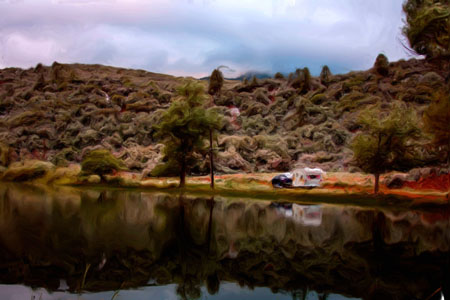
 Preservation of America's Wildlife