Tag: climate-change

  • The Balance of Nature Is Doing What It Does . . .

    Article by
    John Cox M.A, C/M

    The “Balance of Nature” is nature, when left undisturbed, exists in a state of stable equilibrium through self-regulating processes . . .  Predator-prey relationships and food webs show us stability or instability, or worse.  Yes, Nature communicates with us, quite well – “if” or “when” we listen. Historically influential was the fact, we feared Nature in ancient times, when ignorance of Nature was the norm, our basic lack of understanding it, qualified by the mystery and a lack of knowledge to explain how the Natural Process of all living things worked. Those ideas and assuredly, beliefs, have been largely superseded by more modern ecological theories, such as dynamic equilibrium, lands and wildlife health, resilience theory, and science relationships toward research, data gathering, and substantial habitat design theories allowing Nature to take care of itself.  

    The problems we find today is the fact many people do not understand the actual dynamics of the Balance of Nature. People confuse the “Balance of Nature” with whatever an individual finds necessary to explain their rhetoric — i.e. hunting, ranching, public lands industries, et al., habitat loss, et al.

    Contemporary ecology views ecosystems as constantly changing and adapting, rather than being static and perfectly balanced all the time.  This does not mean human-involvement required; but rather, Nature establishes its parameters, and we balance it out with how we react, within the parameters of truthful and credible knowledge we obtain through our constant updating, using observation and a knowledgeable base of information. 

    If Nature of any type, as we see today and yet ignored, is showing us destructive venues, through Wildlife going Extinct due to our actions, and other Terrestrial and Wildlife Environments reacting negatively, as well, then we are doing something wrong.  It becomes self-evident.

    Key concepts of the Balance of Nature Theory

    • Equilibrium: The core idea is that ecosystems return to a stable state after a disturbance.  This means a problem exists, most often not to be ignored or explained away as if the Balance of Nature changes always – it does not, it reacts positively or negatively to our encumbrance.  This means monitoring and being “truthful” about our ecology, mandatory.  Ignorance is unacceptable in Nature. Nature does not understand Special Interest dynamics, or the encumbrance of over-population lies. . . . So one cannot state they support the Balance of Nature, yet involve themselves in the concept of ranching on Public Lands, or Hunting & Trapping across our Public Lands. These entities mentioned here, have become over the years, a burden to the Balance of Nature, and ignored, as Nature destroyed robustly, rather than those who create the burden, change. Ignorance and bias becomes evident, when the refusal, over all, remains unacceptable to those who destroy nature — yet, refer to themselves as Conservationists.

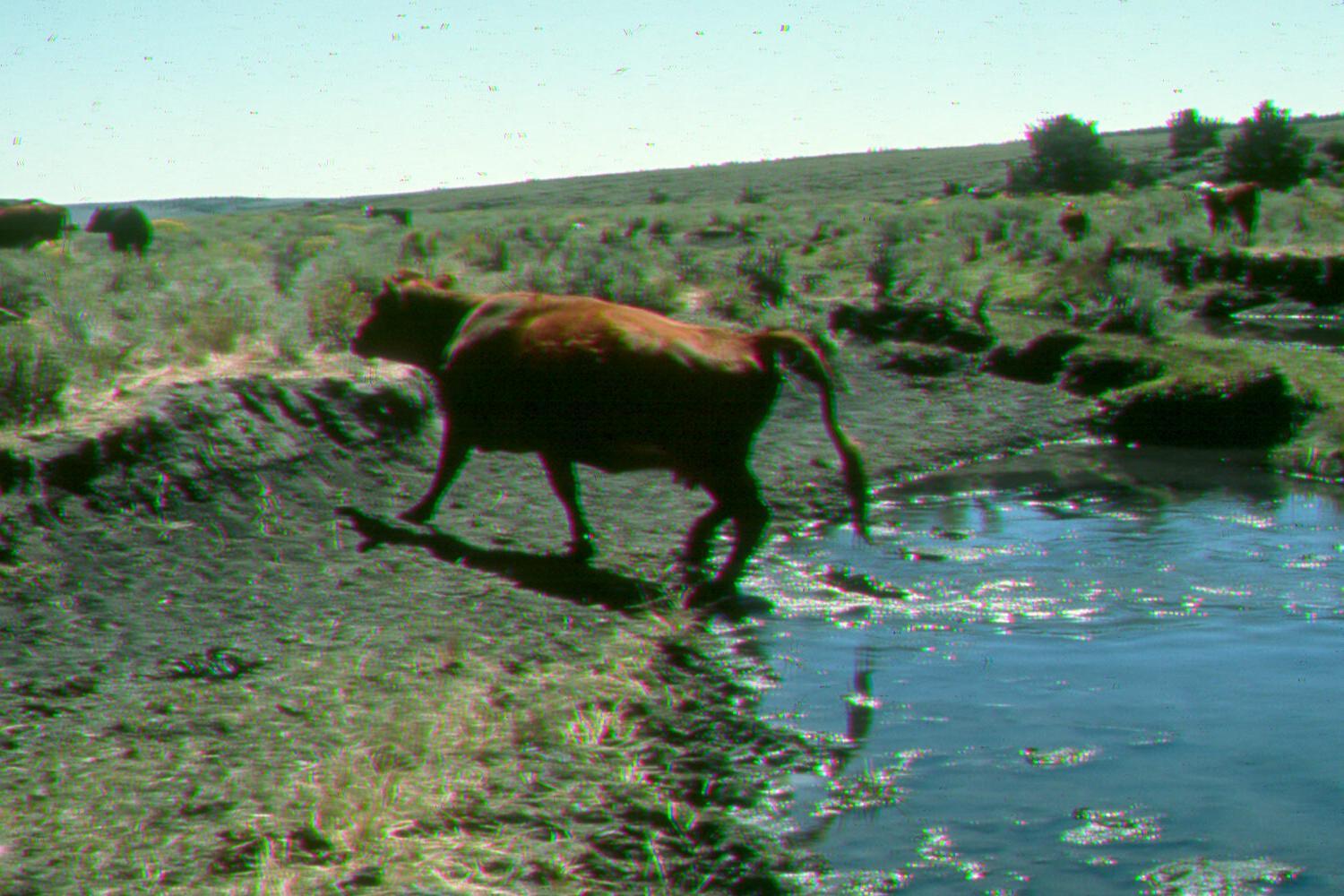
    • Predator-Prey Dynamics & Food Web: A key example is the relationship between predators and prey, where predators keep prey populations in check, which in turn prevents the over consumption of plants.  The living situation, of all life, predicated upon the support it obtains from each Ecological Habitat.  This also means one Ecological Habitat may differ, totally different within a wildlife or terrestrial presence sometimes 15 miles to 25 miles away.  Birth Rates for Wildlife may be totally different, as well.  In these cases, we find hunting and ranching cattle a disturbance, rather than a healthy circumstance that provides a healthy Ecological Habitat or positive Environmental impacts.  Just the opposite is true, as we fine through science – both disturbances antiquated, and the core negative result unhealthy for human’s, as well.

    • Historical roots: The concept can be traced back to ancient Greek philosophers and was later formalized in the 18th century, where early naturalists proposed that the “balance of the animal world” was maintained by a “curious harmony and just proportion” between the increase of animals and their life spans.  During the next 100 years, the numbers of all these species will fluctuate; yet none will increase indefinitely, and only a few will become extinct… Such ‘observations’ are made the basis for the statement that population size is ‘controlled’ or ‘regulated,’ and that drastic changes in size are the results of upsetting the ‘balance of nature.  The fact is, we cannot allow those with antiquated beliefs {only} whose foundations are created from imagination, or worse bis developed through ignorance.  This is when the occasion of observation becomes a sadness, as we are seeing our Lands and Wildlife be depleted for extreme population necessities (Elk, Deer, certain fish, and Cattle above all else), when in fact these extremes destroy more lands as a result.

    Modern ecological view

    • Dynamic rather than static: Modern ecology views ecosystems as dynamic, meaning they are always changing and adapting, rather than being in a constant, static state of balance.  Here we can see the reasoning for the necessity of an acceptable process, a procedure that we can develop truth – without animosity, or hedging a little for a favored monetary arrangement – for industry or ability to control a population, via bias, rather than necessity – especially when no necessity exists.

    • Ecosystems as complex systems: Instead of a simple “balance,” scientists now see ecosystems as complex, constantly changing systems that adapt to new conditions.  Rewilding is a positive result to this situation today.  That is, when done correctly.  Infringement upon a correct methodology toward Rewilding has become challenging for many, due to several reasons.  The most serious is inexperienced people and those who lack education, both, attempt to Rewild, and it becomes a tragedy rather than useful.  For many reasons.

    • Human impact: The theory is often used in a conservation context, but it’s now understood that human activities can severely disrupt these dynamic systems, leading to negative outcomes, inevitable consequences that destroy, rather than influence productive Sustainably circumstances.  Often Wildlife Management, for example, takes the ancient path of belief, despite the conflicts with credible Conservation (refereeing to a group dynamic rather than a credible scientific reality, but an ancient fear-based reality that defies common sense — in a Pick-&-Choose Wildlife Management scheme, based upon Fear, or hunt Paradigms.  Disinformation campaigns the norm, rather than the reality of credible science, chosen.

    References:

    • 1. Egerton FN (1973) Changing concepts of the balance of nature. Quart Rev Biol 48: 322–350.
    • 2.Browne T (1669) Pseudoxia epidemica; or, enquiries into very many received tenents, and commonly perceived truths. 5th edition. London: E. Dod.
    • 3.Hale M (1677) The primitive origination of mankind, considered and examined according to the light of nature. London: W. Shrowsbery.
    • 4.White AD (1896) A history of the warfare of science with theology in Christendom. New York: Appleton.
    • 5.Ray J (1693) Three physico-theological discourses, concerning I, the primitive chaos and creation of the world; II, the general deluge, its causes and effects; III, the dissolution of the world, and future conflagration. 2nd edition. London: S. Smith.
    • 6.Derham W (1714) Physico-theology: or, a demonstration of the being and attributes of God, from his work of creation. 3rd edition. London: W. Innys.
    • 7.Linnaeus C (1744) Oratio de telluris habitabilis incremento. Leiden: Cornelium Haak.
    • 8.Bradley R (1718) New improvements in planting and gardening, both philosophical and practical. 2nd edition. London: W. Mears.
    • 9.Bradley R (1721) A philosophical account of the works of nature. Endeavoring to set forth the several gradations remarkable in the mineral, vegetable, and animal parts of creation. Tending to the composition of a scale of life. London: W. Mears.
    • 10.Linnaeus C (1760) Dissertatio academica de politia naturae. HCD Wilcke, respondent. Upsala, Sweden.
    • 11.Buffon G-L (1756) Le lièvre. In: Histoire naturelle, générale et particulière. Volume 6. Paris: Imprimerie royale. pp. 246–284.
    • 12.Bernardin de Saint-Pierre J-H (1797) Studies of nature. H. Hunter, translator. Boston: Thomas and Andrews.
    • 13.Paley W (1802) Natural theology: or, evidences of the existence and attributes of the deity, collected from the appearances of nature. Philadelphia: John Morgan.
    • 14.Lamarck J-B (1801) Système des animaux sans vertèbres, ou, tableau général des classes, des ordres et des genres de ces animaux. Paris: Deterville.
    • 15.Chambers R (1844) Vestiges of the natural history of creation. London: John Churchill.
    • 16. McKinney HL (1966) Alfred Russel Wallace and the discovery of natural selection. J Hist Med Allied Sci 21: 333–357.
    • 17.Darwin C (1859) On the origin of species by means of natural selection, or the preservation of favored races in the struggle for life. London: John Murray.
    • 18.Clements FE (1916) Plant succession: an analysis of the development of vegetation. Washington: Carnegie Institution.
    • 19.Elton C (1930) Animal ecology and evolution. New York: Oxford University Press.
    • 20.Clements FE, Shelford VE (1939) Bio-ecology. New York: John Wiley.
    • 21. Simberloff D (1980) A succession of paradigms in ecology: Essentialism to materialism and probabilism. Synthese 43: 3–39.
    • 22. McIntosh RP (1975) H.A. Gleason – “individualistic ecologist” 1882–1975: his contributions to ecological theory. Bull Torrey Bot Club 102: 253–273.
    • 23.Williams CB (1966) Patterns in the balance of nature and related problems in quantitative ecology. New York: Academic Press.
    • 24. Ehrlich PR, Birch LC (1967) The “balance of nature” and “population control.”. Amer Natur 101: 97–107.
    • 25. Cuddington K (2001) The “balance of nature” metaphor and equilibrium in population ecology. Biol and Philosophy 16: 463–479.
    • 26. Simberloff D (1983) When is an island community in equilibrium? Science 220: 1275–1277.
    • 27. Nicholson AJ (1933) The balance of animal populations. J Anim Ecol 2: 132–178. [
    • 28.Allee WC, Emerson AE, Park O, Park T, Schmidt KP (1949) Principles of animal ecology. Philadelphia: W.B. Saunders.
    • 29.Pimm SL (1991) The balance of nature? Chicago: University of Chicago Press. [
    • 30. Zimmerman C, Cuddington K (2007) Ambiguous, circular and polysemous: students’ definitions of the “balance of nature” metaphor. Public Understand Sci 16: 393–406. [
    • 31.Wiens J (1989) The ecology of bird communities. Volume 2. Processes and variations. Cambridge: Cambridge University Press.
    • 32. Hastings A, Hom CL, Ellner S, Turchin P, Godfray HCJ (1993) Chaos in biology: is Mother Nature a strange attractor? Annu Rev Ecol Syst 24: 1–33.
    • 33.Pickett STA, Kolasa J, Jones CG (1994) Ecological understanding: The nature of theory and the theory of nature. New York: Academic Press.
    • 34.Pickett STA, Ostfeld RS (1995) The shifting paradigm in ecology. In: Knight RL, Bates SF, editors. A new century for resource management. Washington, DC: Island Press. pp. 261–279.
    • 35. Wu J, Loucks OL (1995) From balance of nature to hierarchical patch dynamics: a paradigm shift in ecology. Quart Rev Biol 70: 439–466.
    • 36. Cooper G (2001) Must there be a balance of nature? Biol and Philos 16: 481–506.
    • 37. Walter GH (2008) Individuals, populations and the balance of nature: the question of persistence in ecology. Biol and Philosoph 23: 417–438.
    • 38. Grimm V, Wissel C (1997) Babel, or the ecological stability discussions: an inventory and analysis of terminology and a guide for avoiding confusion. Oecologia 109: 323–334. DOI
    • 39. Lovelock JE, Margulis L (1974) Atomospheric homeostasis by and for the biosphere: the gaia hypothesis. Tellus 26: 2–10.
    • 40. Tyrrell T (2013) Gaia: the verdict is…. New Sci 220: 30–31.
    • 41.Hanski I (1999) Metapopulation ecology. New York: Oxford University Press.
    • 42.McKibben B (1989) The end of nature. New York: Random House.
    • 43.McKibben (2010) Eaarth: making a life on a tough new planet. New York: St. Martin’s Griffin.
  • Overpopulation Lies Convenient for Exploitors, Destructive to our Wilderness Areas and Wildlife

    Assimilated and Written by
    John Cox M.A. C/M

    When we started to look at a few research papers, as well as technical reports, et al, in regard to wildlife and wilderness areas, we found many severe errors — A lot of obviously misinformed and misinterpreted information.

    Especially from those associated with exploitation of wildlife, e.g. wild horses, wolves, bears, mountain rams, and the list goes on. Basically we found 95% of the over-population discussions and data, to be outright lies. The data as well as swayed-statistics, conflicted directly with the resolutions provided. Worse, they were paid for by many organizations or government entities, or non-profits, that quite obvious, assumed profit over truth — sacrifice over sustainability, and formed severe disinformation campaigns from their lie-dynamic of presentation.

    We can honestly implicate several lobby groups, for example, ranching, hunting, gun manufacturing, oil and gas industry, trapping, and many organizations that tell the public they are “Conservationists”. . . Or, non-profits that state they are “Saving” Wilderness and Wildlife, but involved within the same profit-based dynamic as many others, who merely remain Exploiting Wildlife and Wilderness areas.

    Yet the wilderness areas or lands in discussion, are suffering, some destroyed, and directly related to today’s awkward terminology of “Conservationist” lies. E.g. Over hunted, over fished, some wildlife near extinction, other necessary wildlife beneficial to wilderness areas killed, until not enough left to fulfill their benefits given by them, directly to Ecological Areas. The list goes on and on.

    Rather than go into lengthy detail, the very foundation of “Conservationist” is established on a lie. The same with their “Harvesting” terminology to cover-up they “kill” a lot of wildlife unnecessarily. Harvesting means replenishment, which is a direct conflict to “killing” something, either almost to extinction, or to extinction.

    There is extensive evidence showing global wildlife populations are declining, and claims of overpopulation are largely misleading, and often outright lies, from government and other exploiters of both wilderness and wildlife.

    While some localized instances of species overabundance can occur, the claim of general wildlife overpopulation is a persistent misconception that is directly contradicted by decades of credible and truthful scientific research.

    Evidence for wildlife decline:

    Major conservation organizations report staggering decreases in wildlife populations:

    Massive global decline:

    The World Wildlife Fund’s (WWF) Living Planet Report 2024 found a catastrophic 73% decline in the average size of monitored wildlife populations between 1970 and 2020.

    Vertebrate species are in free-fall: The declines are observed across mammals, birds, fish, amphibians, and reptiles, with freshwater species experiencing the worst drop (85% decline).

    Mass extinction event: This sharp and rapid decline has led the vast majority of ecologists to conclude that the planet is in the midst of a sixth mass extinction event.

    The idea that wildlife is overpopulated stems from a few factors & sources:

    Localized examples: Certain species, particularly white-tailed deer and geese in some areas, can have overabundant populations due to the eradication of their natural predators. This is an exception, not the rule, and is often misconstrued as a widespread phenomenon.

    Media misinterpretation:

    Headlines have sometimes wrongly suggested that the decline numbers reported by organizations like the WWF mean a specific percentage of all individual animals have been lost. The numbers, however, refer to the average decline across thousands of monitored populations.

    Animal farming and pets: When considering total animal biomass, humans and their domesticated livestock now account for 95% of the total mammal biomass on Earth. Claims of wild animals “spiraling out of control” often overlook that the vast majority of commonly consumed animals are artificially bred for human use, not reproducing in the wild.

    Misleading blame: Some have used the idea of wildlife overpopulation to justify practices like hunting or to deflect blame for biodiversity loss from human activities.

    The primary threats to wildlife populations are all linked to human activity

    Habitat loss and degradation:

    The conversion of natural land for agriculture, cities, and infrastructure is the biggest driver of wildlife population decline worldwide.

    Over-exploitation:

    Excessive hunting, fishing, and poaching, including the illegal wildlife trade, are emptying forests and oceans of animals, especially large species.

    Climate change: Rising temperatures, changing weather patterns, and the disruption of ecosystems, such as coral reefs and polar regions, threaten numerous species.

    Pollution:

    Pollution from pesticides, plastics, and other industrial waste is contaminating habitats and poisoning animals. Fertilization Management and Experimentation on Federal Lands and Public Lands.

    Invasive species:

    The introduction of non-native species, often through human travel and trade, can devastate local wildlife populations.

    Quite obvious, until we deny the circumstances of outright lies, to essentially promote exploitation and profits within related organizations that aspire to profits, all the while sacrificing and killing our wildlife and wilderness areas, sustainability nor improvements within any environmental landscape, will lack the benefits of Nature. Human Kind is simply not responsible enough, today, to be honest about the things that need to be accomplished.

    John Cox, M.A. C/M — Preservation of America’s Wildlife