John Cox, M.A. C/M
The first cattle were brought to the geographic area of the United States in 1521 by Spanish explorers. In 1521 the Spanish explorer Juan Ponce de León is credited with bringing the first cattle to present-day Florida.
Between 1539–1541, Spanish explorers moved larger herds from Mexico across the Rio Grande and into the modern American Southwest, including expeditions led by Coronado. The impact noticeable — These Spanish cattle multiplied and formed the foundation for breeds like the Texas Longhorn.
In 1623 English colonists brought the first Devon cattle to Plymouth, Massachusetts, aboard the ship Charity (i.e. ships logs). By 1624 additional cattle (three heifers and a bull) arrived in the Plymouth Colony via Edward Winslow. It’s noted, these English arrivals served as vital sources of milk, leather, labor, and beef for the early eastern colonies.
It’s interesting to find the oldest working cattle ranch in America is Deep Hollow Ranch, established in 1658 and located in Montauk, New York. . . And yet, The Santa Gertrudis, developed on the King Ranch in South Texas, was officially recognized by the USDA in 1940 as the first distinct beef cattle breed developed in the United States; which, development of the Santa Gertrudis, created when ranchers crossbred British Shorthorn and Hereford cattle with Indian Brahman (i.e. India origin) cattle. The optimal ratio settled at 5/8 Shorthorn and 3/8 Brahman. The Foundation sire, a famous red bull named “Monkey,” born in 1920, served as the primary foundation sire for the entire breed.
Contradictions
As usual, nothing is as it seems. New DNA, and ancient cattle bones tested, and we discover the first records of African cattle in the Americas date back to the 1800s, when humped zebu from Senegal and n’dama cattle from Gambia were moved to areas with similar environments across the Atlantic.
Beginning at roughly the same time and continuing into the 1900s, cattle domesticated in southeast Asia for thousands of years were also imported from India. Hybridization among these cattle led to common breeds that are still around today, such as the Senepol from the Virgin Islands and the American Brahman, which were common in the tropics..
When looked at over time, the bones also reveal a pattern of increasing genetic diversity. The oldest bones from Puerto Real and Xochimilco (a settlement south of Mexico City) all originated from European stock, whereas, those from later sites in Mexico seem to have descended from animals more common in the Iberian Peninsula and Africa.
Taken together, the results suggest Spanish settlers began importing cattle directly from West Africa, as far back as the early 1600s.
Unmasking False Information and Fraudulent Narratives
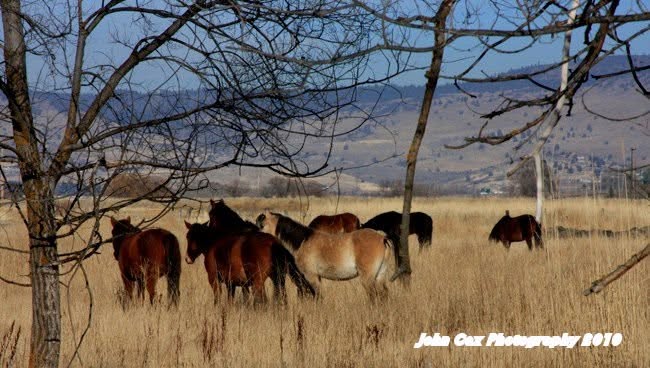
This situation brings about many questions. When myself, and others perused information about cattle, we discover the beginnings of cattle, in the America’s, seem to foreshadow the supposed history of the Wild Horses, and their origination, i.e. as they magically showed up in America – and ironically, with a similar history. Dates were changed, of course, as well as the terminology, but oddly (Fraud is not coincidental when we find the foundation for the Fraud).
We know this history they portray for the Wild Horses, is not correct – no DNA, and no Evidence backs the tales, from the BLM and other government agencies information, that is given to the general public to peruse. Most often information about the Wild Horses, fraudulent, or driven by research papers that were not Peer Reviewed, and driven mostly by objective-opinion of circumstance, within unsubstantiated theories.
Theories are merely assumptions, until proven Scientifically. Science based on the Assumption of Absence, is not science, but rather, Conjecture. The absence of Wild Horses, merely because “not-found” (also — no search & recovery processes noted within this assumption, and printed matter nor logs existed 10,000 years ago, due to several reasons), is problematic, obviously.
This is the foundation that further statements, over many years, from current research papers, simply state the disappearance 10,000 years ago of Wild Horses, and re-established 5,000 years ago – and yet, have nothing to establish, via evidence, those supposed facts exist, at all. . . An Assumption, as in Law and Scientific Research, remain unacceptable, and cannot nor should nit, be considered as any type of identifiable fact, nor a basis for facts.
Truthfully, this fits into the situation we see these same government organizations accomplish, within their Environmental Assessments (i.e. E.A.), as well as their Environmental Impact Statements (i.e. EIS). Copied material from previous Assessments and Reports, already found acceptable for decades, and re-used, over and over again; whereas, only the dates and administrators’ names change – the remainder of the Reports remain the same – copied / plagiarized.
How do we know this? We matched the weather reports on all of the reports – and found: Weather cannot be the same, for example, described in a 1982 Report / Assessment in April of that year, and a 1995 Report / Assessment in April of that year. The Weather Exactly the same, temperatures, wind gusts, cloud patterns, et al. The same with 18 reports over the years, when chosen randomly to peruse. Although different dates and times of year, but the same weather patterns, exact and to the letter, of previous reports. We found in some years “droughts” were never officially declared, other than in some E.A.’s
The big question now is the fact, should we accept anything the Bureau of Lands Management has reported as a truth. Or, do we simply trash much of their work, for being outright Fraudulent?
Only then, can we move on to Truth, and a more “Credible-Base” of information, favoring lands management decisions, based upon “Credible Science”, Logical and Honest research. We must develop Superior Decisions based upon All Credible Facts, currently, that directly involve our Public Lands.
Better decisions based upon truth, develops into healthier Public Lands, and a future of sustainability for all on this planet. Acceptance of anything less, and we will continue to see destructive management paradigms, erroneous population statistics of all Wildlife, not just the Wild Horses, as well as false reasons given for Roundups of Wild Horses, or Eradication of Wolves, biasly generated and not of science, as we see today.
All highly unnecessary, and to coverup the tragedy of the prevailing destruction of our Public Lands, for a mere -1% of Beef Products – that are subsidized in the $-Billions of Dollars yearly. The sacrifices we observe are too great, as well as too expensive for America. . .” — John Cox, M.A. C/M


