Written / Researcher – John Cox, M.A. C/M
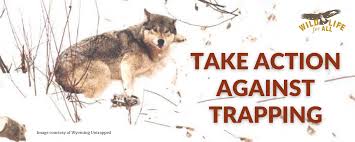
I reviewed a Social Media page today; whereas, a Trapper, who also runs a fishing store, was watching a Coyote, die a slow death. He was speaking calmly, although irrationally as if he assumed it normal, and I observed so many symptoms of Sociopathic Behaviors, that it amazed me he is not in prison, or a mental institution. His name and Social Media Page is filled with advertising his toxic chemicals, to quite frankly, entertain his supporters, and in turn they also derive the same satisfaction, of torture and abuse via toxic-chemicals, by watching Wildlife Die a Slow, Painful, Death.
This is not just a simple Anti-Trapping Article. This is pointing out Human-Sociopaths-Behaviors, being, no doubt, harmful to present itself upon a Social Media Platform, as if an acceptable practice and way to treat animals. But the debate moves on, and hopefully, we can subject these types of people to prison, or mental institutions, rather than allow them to run slip-shod within our Wilderness areas.
The necessity of trapping and poisoning wildlife is a subject of intense debate in America, with a significant shift toward non-lethal, science-based coexistence strategies. While some stakeholders argue that trapping remains a crucial tool for wildlife management, predator control, and public health, others contend that these methods are archaic, inhumane, and often counterproductive to ecological balance.
Arguments Against Continued Use (The Case for Non-Lethal Management)
- Ineffectiveness: Decades of research suggest that trapping and poisoning (such as rodenticides) often fail to reduce wildlife conflicts, frequently disrupting family structures and leading to faster population rebound.
- Environmental Damage & Unintended Victims: Poisons like rodenticides and M-44 cyanide bombs are indiscriminate, affecting hundreds of thousands of non-target, native species (including pets and endangered species) annually.
- Non-Lethal Alternatives: Effective alternatives exist, including livestock protection dogs, fladry (colored flagging), better fencing, and habitat management.
- Disease Control Concerns: Experts, including researchers cited by Born Free USA, indicate that killing animals does not control disease transmission and can sometimes increase the spread of diseases like rabies by disrupting stable populations.
Arguments For Continued Use (The Case for Management)
- Population Control & Safety: Proponents argue that trapping is needed for managing raccoon populations, preventing damage, and managing wildlife in suburban areas.
- Conservation and Disease Management: Some wildlife agencies view trapping as a tool for protecting livestock from predators and managing diseases. Wildlife Services has been taken to task many times, for Abusive Behaviors toward Wildlife, and yet . . .
- Protecting Infrastructure: Trapping is used in facility management to protect infrastructure and property from damage. Yet, humane methodology ignored, and science placed upon a back-burner, becoming a shallow phrase of necessity, when the abuse becomes obvious.
Recent Trends
Several areas are taking steps to ban or restrict the use of poisons and traps on public lands. For instance, California has implemented restrictions on using certain poisons and traps, prioritizing humane solutions to human-wildlife conflicts. Additionally, the use of lead ammunition is heavily debated due to its role in poisoning scavenging wildlife.
It is way [past time to keep looking away, or ignoring Trapping and abusive behaviors toward our Nation’s Wildlife. It is, as we observe, simply getting worse, daily. . .
(Filed 03-25-2026)
 Preservation of America's Wildlife
Leave a comment