Author: Photographer — Journalist

  • American’s and Our Wild Horses Do Not deserve, nor want, what is ongoing on Our Public Lands

    “The vicious are most to be feared, when they pretend to be good. ” Publius Syrus (“Les méchants sont le plus à craindre, quand ils prétendent être bons.”) Zero’d-Out Birth Rate = Extinction

    On Our Public Lands, right now, we have some of the most misinformed, misguided, and unapproiate management paradigms that ever existed within the history of the United States.  Not only is the Bureau of Land Management and the USDA forestry, tell us constantly, lie after lie about the actual health of Our Public and Federal Lands, that we pay them $-millions upon $-millions to manage properly and for Our, the Taxpayer’s, benefits; but they simply have No Science to back up their ecology or environmental management paradigms what so ever.  The government’s Grazing Permit Programs are Corrupt, in total.

    Although, illegitimate science flows in vast amounts, that support a Single Species Paradigm of a non-indigenous species, cattle.  No “Legitimate Science” supports these endeavors, and our Ecological Zones, which eventually interact in the long-range affairs into our nations “Overall Environmental” complex, suffers greatly.

    The Reality?  Good science shows us we are even wiping-out Our own species, the Human Species, as we also wipe-out essential wildlife, grasslands, oceanic food chains, our climate, and much more – all in the name of one-species, of two or three industries. . . cattle, oil, and mining . . . and more corporate misinformed agenda’s (corporate non-profits) take advantage of these very corrupt paradigms, in the name of an odd re-termed cause of “Humane”, and yet simply promote the lack of integrity, lack of ethics, and dishonesty of the continuous tragedy, ongoing, toward Our Wild horses, Our Wildlife.  Corruption, in total, is what we see constantly now, on Our Public and Federal Lands.

    Then we have organizations, corporate and non-profits alike, that are presenting more of a disturbance, that again, is backed by neither legitimate science, nor management paradigms at all.  Their pretense of being “good” or “humane” is ridiculous – mostly their profit-driven statements simply support “corruption” entirely, when one actually pays attention to the reality of them.

    Not only can we do better, but we can become honest about things, and in the interim save the Wild Horses and America’s Wildlife . . .  Honesty and Integrity, in reality, cost nothing, and free the last time I checked.

    Let me become even more clear.  Those of us around horses, for decades now, can see things others simply do not.  The situation, for example, to see how a horse owner, or rider, how they treat their horse, is very visible.

    We can see how heavy-handed or lack of Reins-Control, or even appropriate Collection Technique, from looking at the back hooves of the horse, at a glance.  We can see when a person “fears” their horse, or the way they sit-the-saddle, and how uncomfortable or afraid they are of the horse.  Then there exists those who assume they know everything about the horse, yet know nothing, as it is quite obvious, they have not either been riding for long, or their approach to talking about horses is, obviously, not of an experienced person.  We can see this, very easily I might add.  And these people, ironically giving information about horses to the general public, that does not know about horses!  We have a human-problem here, of ignorance, mostly!

    There exist people on the present WH&B Board, who fit the description of inexperienced riders, quite well – and I see people applying for positions on the WH&B Board, that have no experience, but give people the pretense of having years of experience.  So here we sit, and the Wild Horse tragedy, is at Crisis Level, and need to be left alone!

    Ecological Health and Population Moderation

    With this knowledge we move forward, legitimate knowledge, by the way, not pretend knowledge and backed by “profit oriented” mind-sets, that simply pretend they know everything.  We move on to Science, and how Nature, inclusive of wildlife and terrestrial landscapes alike, establishes a “Moderation” of populations, or referenced as Population Ecology. . .

    The very basis of this “moderation” context is based upon population counts of species – science and appropriate data gathering is involved here, as well as “truthfulness” – “honesty” – and allowing the science-data speak for itself.  Phonies, fakes, and know it all’s need not apply here (the Wild Horses already slaughtered due to these situations alone), because bias or bigoted opinions have no place in honest science; nor, does there exist a “facade” of science be presented to the public that is derived from a controlled template or speech, manipulations of what to say in order to “sell” bogus science to the public, to make them believe it is legitimate (i.e. wild horse band roundups, Pesticide PZP and other breed controls – forced upon an underpopulated species of wild horses — raises the Red Flags here of corruption, of dishonesty, of bad science, covering up the corruption for future profits). . .

    The dynamics of Population Ecology shows us, beyond doubt, that the population of a given species within a given habitat does influence the local population stability, its expected growth, and its likelihood of survival.  In this interconnected world that is a functional “ecosystem” the fact is the population of one organism very likely to affect the population of others.

    Here we start to see just how inefficient and incompetent, and based upon lack of science and data the Single Species Priority of cattle paradigms are, and simply not of science, but of bias, of a bigoted mind-set driven by profit-oriented dynamics, that simply do not work in our Natural Habitats, never have – never will, as history quite clear on this particular subject . . .

    Ecology and Dynamics of Wildlife

    In ecology, a population includes all of the members of one species, among others, living in the same place.  Population ecology is the statistical study of a local population’s birth rate, death rate, and other factors that influence the survival and reproduction of each.  A study of how local wildlife and vegetation react to the overall environment.  This dynamic alone, ignored by those who, ironically, manage our Public and Federal Lands, quite evident.  Ignored is the fact of truth, honesty, and ethics, as well as the dynamic of offering land manager’s clues, or data, to advance their management paradigms for healthy lands, ecology, and much cheaper expense to provide a healthy environment.

    Taxpayer’s, just as the Wild Horses and Wildlife, presently on Our Public and Federal Lands, abused to the point of “Excess” as well as evident extinction (or in the case of tax-money, simply no longer available) Birth Rate vs Death Rates ratios show us the problem, quite well, I might add, but ignored by current government management agencies.

    The 1% of sales margins on our domestic-markets, of beef product, shows us quite well, that the $-millions upon $-millions of dollars thrown at the Grazing Permit programs on Public and Federal Lands, are simply unneeded, and a waste of money – and the only thing developing is our Public and Federal Lands are the worst, health-wise, then ever before in history – Science shows us this quite efficiently.

    This becomes an embarrassment to all American’s, when many observe the situation ongoing on Our Public and Federal Lands, and the incompetence that is even more obvious.  Can we do better?

    Government Agency Response to Bad Agency Management

    Here we go, on the fact, not just science but actual fact of observation as well as data and information collection, our current government agencies blame such things as the Wild Horses, the Wolves, the Bears, the Coyotes, the Falcons, the Eagles, noxious weeds (lie upon lie to avoid the major issues, the incompetence of these government agencies to manage our Public and Federal Lands adequately and properly) and so many more wildlife, that things are just getting very ridiculous, more often than not.  And the Grazing Permit Program?  Numbers do not lie, when data collected within an honest, ethical standard, which equates to good science, not corruption nor corrupt and malicious science.
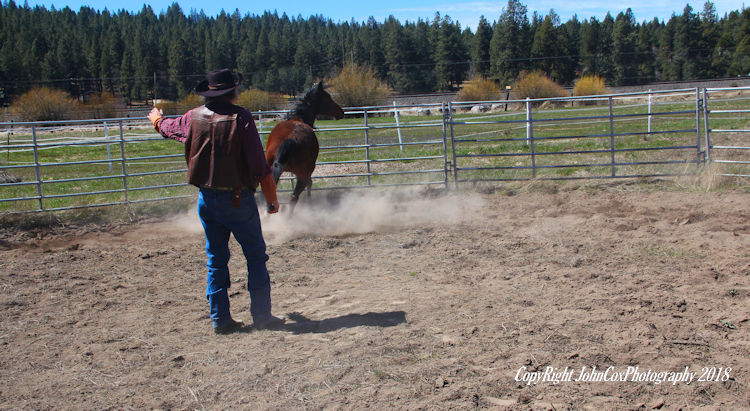
    Well, to cover-up the outlandish corruption, they simply reduce the cost of the grazing of Cattle AUM Units (i.e. one cow one calf), increase the amount of Grazing Permit Lands, and increase the amount of taxpayer money allocated toward Roundups and Breed Controls to attack the Wild Horses, even though there exists no overpopulation of Wild Horses at all, on Our Public Lands, nor do the Wild Horses destroy or devastate our lands (as good science shows us), and are not pests at all (given this title of “pests” by those who want to dart – essentially zero-out to extinction) the Wild Horses — with breed controls to control the “pests” as they say) – and, as I mentioned earlier, only 1% of Grazing Permit cattle product is sold domestically on the commercial market – and (this is extremely interesting and a truth the cattle industry cannot avoid) we see from the USDA statistics, 28% to 32% of all beef product sold domestically, is thrown away, due to longevity of shelf-life.  Is there a purpose to the current Grazing Permit Programs?  None!

    Population Ecology

    Population Ecology of our wilderness areas, our Public and Federal Lands, is more relevant now than ever before on Our Nation’s history.  Biodiversity is more significant than ever before, as well.  The forces that sculpt our populations, both human and in nature, living (biotic) and non-living (abiotic) forces, contribute to theirs’s and our growth, for a healthy environment to live within, or a decline, and ecological systems destroyed, our water undrinkable, our forests neglected, mismanaged and sacrificed for beef, the same with our deserts and wildlife in common.

    Can We Do Better?

    Overwhelmingly, we can do much better, than what is ongoing today, and what we are accepting as normal. It is more important, than ever before, when so much of biodiversity is threatened, continuously, is the fact we need to “understand” these forces, and not just shrug and repeat the constant-push of misinformation, that in reality is causing extinction of our Wildlife, our Wild Horses, our Grasslands, our oceanic environment – our taxpayer money simply wasted on these current paradigms of mismanaged lands and falsified and mismanaged Wild horses?  Disrespect from government agency personnel, our legislators working only for corporations and not taxpayers or American’s in general, disrespect from corporations and non-profits alike (charitable organizations supposedly use donation-money to save our wilderness as well as wildlife and our wild horses, instead use it as their personal piggy banks and increase their 0wn living standards).

    We can do better, much better!  Honesty, respect, ethics, and truthful science needed!  The bottom-line of it all!  Stand up Now, for our wild horses, and actually ourselves, as the Human-Species in danger as well, and from all of this ignorance, bias, and Corruption!  STAND UP – TIME FOR AMERICA TO SPEAK!  WE DO NOT NEED TO ACCEPT CORRUPTION!  NEVER!

    Article Written by:  John Cox, Cascades
  • Indigenous Wild Horses in America — Yet More Links to the Truth

    “The notion that nothing else is left to find, or discover, in archeology and paleontology research, is and remains ridiculous.  What we do have are challenges, daily, at locating and cataloging finds, and disseminating this information to the general public; which, requires them to understand the aspect that history does change, and is in continuous “motion of change” due to 80% of our history is yet to be found, then confirmed.”  — Anonymous Paleontologist

    Interesting to us as horse people, we find those who tracked the spread of European Language, can be, ironically also noted for finding, somewhat, the beginning history of the “domesticated Horse”. Until recently, those descendants of goat and sheep herders who formed the Yamnaya culture in the steppes of today’s Ukraine and western Russia about 5,000 years ago, were thought to have domesticated the horse. . .

    This information led us down the road of confusion in the actual matters of Horse History. It is believed they rode the subdued animal, as they spread southeast, which also brought the Indo-European group of languages to Anatolia (a vast region mostly in today’s Turkey), which is not of our concern here as much as the horse, and horses existing and domesticated before this situation.  Theories arose from this, and too many questions developed that required answers.

    As archeology changes our world with new discoveries and bone piles/civilization finds, among other research and discoveries due to new findings, the landscape remains in a constant flux of “finds” and history updates.  Theories based upon “finds” develops, and in this case scenario we find a completely different type of nomad, and a different horse link. This particular nomad tribe, a smaller group named the Botai, who about 500 years earlier east of the Yamnaya, in Kazakhstan – in reality, domesticated the horse before the Yamnaya.  With further insight, we can correlate this news with previous “finds” and understand we may be looking at the relationship of these recently discovered horses to our wild horses of today — even though, this situation sparks questions left unanswered, we can lace-together previous discoveries and to actually understand how all of these links fit together.

    What is neglected in this particular “find” is that the horses were wild, before being domesticated; thereby, the theory of wild horses non-existent today is simply in error, and no longer credible. — and at that time, as other dissociated evidence from other “finds” in the Americas, lends new credibility to the horse existing there after the Plesticine Era (as we find more bones from the Plesticine Era horses in Washington, Oregon, and Utah), and the pieces of the puzzle of horse history start to come together, better than before, and with more details.

    As things do happen in research and archeological digs, when one door opens many more open as well, we discover genetic analyses of the Botai led to startling conclusions about the origin of today’s horses. History changes again.  The “Old Guard” sneering and shaking in their boots of conservative mind-sets, once again grow uncomfortable at the younger upstarts, or those who do change our history, and with evidence to back it up entirely.

    The Eurasian steppe is a vast grassland stretching 8,000 kilometers (about 5,000 miles), from Hungary and Ukraine in the west through Kazakhstan to Mongolia and China in the east, and into Siberia (and just what we needed to know — confirmed — a missing link). The Botai lived in what is now Kazakhstan, from about 5,700 years to 5,100 years ago.

    It is among the Botai that archaeologists located the oldest evidence of horse domestication (found so far, at least): Pottery with traces of mares’ milk, and horse teeth that seem worn down by bits.  No evidence existed at this find as to where the horses come from, rounded up from where, then to domesticate; thereby, according to them, the horses just showed-up and ready to be ridden– and thereby, the problem of horse history done by non-horse people — as they did not just show up and were domesticated.  Now we begin to understand the principle of why theories exist — and when based upon evidence, we can also postulate these theories very accurately — and define them accordingly.

    Wild horses Genetics and DNA

    Genetic analysis of Botai horse-remains, and what was thought to be the only surviving wild horse – the so-called wild Przewalksis – by the French National Center for Scientific Research and Université Toulouse III–Paul Sabatier, resulted in some unexpected findings.

    1. Unexpected finding is that the “only wild horse still existing,” the wild Przewalski, is not actually wild. It can be theoretically sound, and descended from the Botai horses, which many suppose were wild, or is it a separate horse entirely? more info needed here;


    1. Unexpected finding is that the Botai did not domesticate the Przewalski, but did domesticate some other unknown wild horse (linguistics and language their specialty and not horses). This unknown animal could be the forefather of the Przewalksi, but for now separate, so their un-knowledgable theory goes, based on their lack of previous history of horses — we see it often, and is simply not that unusual;


    1. Unexpected finding is that none of today’s horses are descended from the Przewalksi, but from the Botai descendants, and confirmation links exist, through Siberia, Alaska, British Columbia, and the America’s;


    1. Final unexpected conclusion is that the horse was domesticated not once but twice. That’s according to the molecular biologist from the Natural History Museum in Denmark. . .

    Significant Questions Remain

    Maybe the Botai did give the Yamnaya the idea of how to train horses. But to be clear, the Botai were not ancestral to, or even related to, the more western Yamnaya, reported the researchers.  This is where knowledge of horses, their survival skills in wilderness, and their capacity to be rounded up and domesticated come in — and more questions develop here as well, in the matters of where the wild horses came from . . .

    It is speculative, but likely that when the two groups, or tribes, did encounter each other, they fought.

    Hostility with the Botai explains why, when the Yamnaya-related groups meandered eastward, they didn’t strike roots mid-route, but continued all the way to the Altai Mountains of Southern Siberia – thousands of kilometers in distance. There, these pastoralists who came from eastern Europe became the forefathers of the culture called the Afanasievo.

    This far-flung wandering by the Yamnaya fits with Russian literature, which indicates that Botai descendants were warring with them. Why would they clash? “Probably because the descendants of the Botai people didn’t like their hunting territory being overrun,” as one researcher speculates.

    As for the Botai themselves, following their Bronze Age existence, their homeland central steppe was totally overrun by groups coming in with wheeled-vehicles, horse drawn and ox-drawn carts — horses once again, we find, already domesticated, but more different blood-lines?  Working horses developed?. Indeed, to get away from the incoming population of people, the descendants of the Botai hunter-gatherers retreated into the forest-steppe, with their horses.  Did they develop another lineage of horses?  Not so impossible, when Waring tribes of people gather other tribes horses, when winning the battles.  Perhaps the missing X-Gene so often discussed when found in blood-samples or DNA complex dynamics, but no one ever examines the possibilities of discovery, or at least admit it was discovered, yet. . .

    Nomadic Skills Improve – Hunters use of Horses Evident

    These relocated Botai may even have been considered the highly nomadic forest groups of Siberia (thereby, the confirmed Horse Connection and into the America’s), who left a pattern of burials from Finland to Mongolia from about 2100 B.C.E. to 1900 B.C.E. (known as the Seima-Turbino phenomenon).

    For our interests, this shows us the Botai tamed horses before the Yamnaya. But it seems that, wherever they rode their horses, neither of these groups went south to Anatolia, which Indo-European languages began to arise there, and from this period onward has nothing to do with the trail of the horse.

    The non-existent trail southward, but rather eastward and into Siberia, the actual trail for the horses through Siberia then southward, confirms not only evidence and further information horses existed in the America’s, but also confirms several hypothesis theories in the matters of horses actually existed in the America’s during the Plasticine Era and afterward (bone piles show us this without a doubt to be true) and quite frankly, the horse never was, or never did go, extinct. . .

    Interesting that the Genetic analysis of 74 human skeletons shows that the Yamnaya and Botai weren’t even related: The Botai arose from a hunter-gatherer population “deeply diverged” from the Yamnaya, the researchers say. This also confirms several theories in regard to the hunter-gatherer’s advanced survival skills and necessity of tracking and catching up with wildlife, rather than just running down wildlife on foot – as success in kills evident in many bone piles in the Northwest show — in what is now known as Alaska, as well as down to the America’s, that horses used in hunting gathering to be consistent with other wildlife bones in B.C. and in the Pacific Northwest.

    The Botai Domesticated horses did survive and became wild Przewalksis – as the hunt for clues in the genetic records continues.  And the questions in the matters of the Botai people, and rode their horses into Siberia, would fit, in total compliance, to all theories and bone piles located from Siberia to Alaska, then down into the Americas, as a per-existing community of horse-bones show us. . . This reaffirms the more elaborate horse bone finds in British Columbia, and those into Washington State and within the area of the Oregon Ice Caves, among others.

    We are not, by any means what so ever, done with accumulation of facts and evidence of our history, as the pre-European Invasion history shows us quite well.  The history and evolution of the horse is no different, and never has been actually — A matter of perception?  No doubt, and corrected on a continuous basis, whether the human species accepts it or not . . ..

    To ridicule or even develop a pre-tense that all has been found, and all is definitive, toward one mind-set and in opposition to another, is pure clap-trap and unsupportable, as well. . . The Human-Problem exists, and remains alive and well, with notable problems of perceptions becoming more true than truth itself, and especially with our history, and with, at times, what we even did yesterday.  But one thing is for sure, and make no doubt, the link to our Horse History is complete, and they never died off, as there is no supporting evidence of such, in America — the fact is, because there exist missing bones, which is not evidence, that just means those bone-piles or remnants have, very simply, not been found yet — The Truth is Out there, and exists, whether any of us agree with that or not.

    Article Research and Written by John Cox, Cascades

    __________________________________

    References:

    1. Mallory, J. P. (1989) in In Search of the Indo-Europeans (Thames and Hudson, London).
    2. Lister, A. M., Kadwell, M., Kaagan, L. M., Jordan, W. C., Richards, M. B. & Stanley, H. F. (1998) Ancient Biomol. 2, 267–280.
    3. Vila`, C., Leonard, J. A., Go ¨thersto ¨m, A., Marklund, S., Sandberg, K., Linde ´n, K., Wayne, R. K. & Ellegren, H. (2001) Science 291, 474–477.
    4. Oakenfull, E. A. & Ryder, O. A. (1998) Anim. Genet. 29, 456–459.
    5. Bjo ¨rck, S., Kromer, B., Johnsen, S., Bennike, O., Hammarlund, D., Lemdahl, G.,Possnert,G.,Rasmussen,T.L.,Wohlfarth,B.,Hammer,C.U.&Spurk,M. (1996) Science 274, 1155–1160.
    6. Eisenmann, V. & Baylac, M. (2000) Zool. Scripta 29, 89–100.
    7. Oakenfull,E.A.,Lim,H.N.&Ryder,O.A.(2000)Conserv.Genet.1,341–355.
    8. Bowling, A. T., Del Valle, A. & Bowling, M. (2000) Anim. Genet. 25, 1–7.
    9. Ishida, N., Hasegawa, T., Takeda, K., Sakagami, M., Onishi, A., Inumaru, S., Komatsu, M. & Mukoyama, H. (1994) Anim. Genet. 25, 215–221.
    10. Ishida, N., Oyunsuren, T., Mashima, S., Mukoyama, H. & Saitou, N. (1995) J. Mol. Evol. 41, 180–188.
    11. Kavar, T., Habe, F., Brem, G. & Dovc, P. (1999) Anim. Gent. 30, 423–430.
    12. Kim,K.-I.,Yang,Y.-H.,Lee,S.-S.,Park,C.,Bouzat,J.L.&Lewin,H.A.(1999) Anim. Genet. 30, 102–108.
    13. Xu, X. & Arnason, U. (1994) Gene 148, 357–362.
    14. Bandelt, H.-J., Forster, P., Sykes, B. C. & Richards, M. B. (1995)Genetics 141, 743–753.
    15. Bandelt, H.-J., Forster, P. & Ro ¨hl, A. (1999) Mol. Biol. Evol. 16, 37–48.
    16. Forster, P., Harding, R., Torroni, A. & Bandelt, H.-J. (1996) Am. J. Hum. Genet. 59, 935–945.
    17. Saillard, J., Forster, P., Lynnerup, N., Bandelt, H.-J. & Nørby,S.(2000)Am.J. Hum. Genet. 67, 718–726.
    18. Forsten, A. (1998) Q. Sci. Rev. 17, 1097–1100.
    19. Schreiber,A.,Eisenmann,V.,Zimmermann,W.(2000)inEEP,AsiaticEquids, Husbandry Guidelines, ed. W. Zimmerman (Zoologischer Garten Ko ¨ln, Ko ¨ln, Germany), pp. 1–34.
    20. Prado, J. L. & Alberdi, M. T. (1996) Palaeontology 39, 663–680.
    21. Raulwing, P. (2000) in Horses, Chariots and Indo-Europeans. (Archaeolingua, Budapest).
    22. Wilson, I. J. & Balding, D. J. (1998) Genetics 150, 499–510.
    23. Xu, X., Gullberg, A. & Arnason, U. (1996) J. Mol. Evol. 43, 438–446.
    24. Epstein, H. (1971) in The Origin of the Domestic Animals of Africa (African Publishing, New York), Vol. 2.
    25. Nissen, J. (1997) in Enzyklopa¨die der Pferderassen: Europa, Band 1 (Kosmos, Lisbon).
    26. d’Andrade, R. (1945) Boletim Pecua´rio, XIII, 1–13.
    27. Ebhardt, H. (1962) Sa¨ugetierkundl. Mitteil. X, 145–168.
    28. Uerpmann, H.-P. (1990) Madrider Mitteil. 31, 109–153.
    29. Loftus, R. T., Mac Hugh, D. E., Bradley, D. G., Sharp, P. M. & Cunningham, P. (1994) Proc. Natl. Acad. Sci. USA 91, 2757–2761.
    30. Bradley,D.G.,MacHugh,D.E.,Cunningham,P.&Loftus,R.T.(1996)Proc. Natl. Acad. Sci. USA 93, 5131–5135.
    31. Troy, C. S., MacHugh, D. E., Bailey, J. F., Magee, D. A., Loftus, R. T., Cunningham, P., Chamberlain, A. T., Sykes, B. C. & Bradley, D. G. (2001) Nature (London) 410, 1088–1091.
    32. Luikart, G., Gielly, L., Excoffier, L., Vigne, J.-D., Bouvet, J. & Taberlet, P. (2001) Proc. Natl. Acad. Sci. USA 98, 5927–5932.
    33. Boyd, L. & Houpt, K. A. (1994) in Przewalski’s Horse, the History and Biology of an Endangered Species, eds. Boyd, L. & Houpt, K. A. (State Univ. of New York Press, Albany), pp. 195–228.
    34. Levine, M. A. (1999) J. Anthropol. Archaeol. 18, 29–78.
    35. Hemmer, H. (1990) Domestication: The Decline of Environmental Appreciation (Cambridge Univ. Press, Cambridge, UK), 2nd Ed.
    36. d’Andrade, F. (1973) A Short History of the Spanish Horse and of the Iberian ‘‘Gineta’’ Horsemanship for which this Horse Is Adapted (Lisbon).
    37. Levine,M.A.(1999)inLatePrehistoricExploitationoftheEurasianSteppe,eds. Levine, M. A., Rassamakin, Y., Kislenko, A. & Tatarintseva, N. (McDonald Institute for Archaeological Research, Cambridge, UK), pp. 5–58.
    38. Anthony, D. W. (1995) Antiquity 69, 554–565.
    39. Linduff, K. M., in Steppe Adaptation and the Horse, eds. Levine, M., Renfrew, C., Boyle, K. (McDonald Institute for Archaeological Research, Cambridge, UK), in press.
    40. Renfrew,C.(1998)inCreativityinhumanEvolutionandPrehistory,ed.Mithen, S. (Routledge, London), pp. 260–284