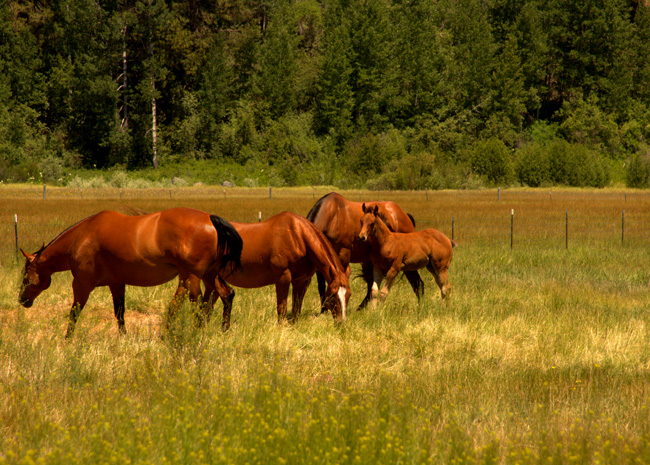
“The Endangered Species Act is the strongest and most effective tool we have to repair the environmental harm that is causing a species to decline.” Unknown
There is a lot going on in the Wild Horse world of today. Keep in mind one person or one organization cannot, and should not have the ability to develop regulatory systems of management. Many debates exist today on how to legitimately control horse populations on Public Lands – and these many ideas overlook the most significant – Natural Progression.
Often many people and organizations, in order to present their awkward at best agenda, promote a “Styled” population control methodology, that in reality and over the years gave cause to the current mess that exists. A natural habitat, as science finds over and over again, creates population control within a natural circumstance.
But the question remains, how can we protect the Wild Horses in America and on our Public Lands? It is a process, since we as human’s require a process for just about everything we do, which most often stifle’s nature’s natural ability to manage things on its own. We humans have the ability to simply scoff at nature, and not so ironic pretend that we know how to manage nature better than nature does.
We see the results of this particular mind-set daily. Engineers and Accountants slap each other on the back with congratulations at their dynamic designs – which often do nothing more than destroy many natural environments (for profit – e.g. Fracking or oil platforms both terrestrial and marine good examples, but the list is vast).
So onward we go, and when the mention of allowing Wild Horses within a natural habitat to prosper within a natural progression and biosphere, it is shunned ignorantly at best. And yet, within America’s Public Lands it is Grazing Permits of cattle that have shoved Wild Horses into smaller biosphere’s, combined with a government’s lack of knowledge of Wild Horse Herd Management, that have indeed destroyed the natural progression of our Wild Horse populations; which in turn have created Wild Horse Herd overpopulation – but the reality – there exists very few left on our Public Lands.
But the numbers of Wild Horses taken from Public Lands overwhelmingly show beyond doubt, that if continued – in a short time period there will not be any Wild Horse’s left on America’s Public Lands. America’s Heritage Wiped-Out due to Stupidity and an overwhelming Know-It-All-Attitude; that has only created a worse situation, ten times more costly to taxpayer’s as well, that would NOT have happened if the Wild Horse Herds were simply left alone, or to nature’s own means of methodology.
The fact is this – Everything on this planet of our does not have to be managed. Humans have screwed up just about everything we have attempted to manage! The reality is human greed and self-importance has corrupted our natural environment, and is currently destroying it as well.
Endangered Species Act
“If education really educates, there will, in time, be more and more citizens who understand that relics of the old West add meaning and value to the new. Youth yet unborn will pole up the Missouri with Lewis and Clark, or climb the Sierras with James Capen Adams, and each generation in turn will ask: Where is the big white bear? It will be a sorry answer to say he went under while conservationists weren’t looking.” Aldo Leopold, Sand County Almanac
America has the Endangered Species Act. This is a situation that essentially defines whether or not we have managed a species correctly, or handled the situation within an incompetent manner – yes, disregarding the jurisprudence of legal fact, what is left to us is the reality – We as human’s have mismanaged wildlife due to our overwhelming ignorance and often even hatred or apathy toward many select species – the Wild Horse Herds on America’s Public Lands no different — thereby the ESA put into place to clean up our mess of our own creation!
Right now it is Section 4 of the Endangered Species Act that needs our attention. It outlines the requirements for a species to become listed, and according to Law – Protected.
SEC. 4. (a) GENERAL.—
The Secretary shall by regulation promulgated in accordance with subsection (b) determine whether any species is an endangered species or a threatened species because of any of the following factors:
(A) the present or threatened destruction, modification, or curtailment of its habitat or range;
(B) overutilization for commercial, recreational, scientific, or educational purposes;
(C) disease or predation;
(D) the inadequacy of existing regulatory mechanisms; or
(E) other natural or manmade factors affecting its continued existence.
With respect to any species over which program responsibilities have been vested in the Secretary of Commerce pursuant to Reorganization Plan Numbered 4 of 1970—
(A) in any case in which the Secretary of Commerce determines that such species should—
(i) be listed as an endangered species or a threatened species, or
(ii) be changed in status from a threatened species to an endangered species,
he shall so inform the Secretary of the Interior, who shall list such species in accordance with this section –
ESA Process In Review (Summation of Government Documentation)
Section 4 is the most extensive part of the Endangered Species Act. It spans a spectrum of activities beginning with how we identify species in need of the ESA’s protection, to their removal from the lists of endangered and threatened species, once recovery goals are achieved.
Whether initiated by the Service, or by concerned citizens, listing a species is not an arbitrary process. In order to evaluate whether a plant or animal should be listed as endangered or threatened, five factors are considered using the best scientific and commercial information available.
The process of listing a species is initiated in two ways. In the first process by which species may receive protection under the Endangered Species Act, the Fish and Wildlife Service or the National Marine Fisheries Service identify species for listing through internal assessment of their status.
These assessments routinely incorporate information from scientific literature, Federal and State natural resource agencies, universities, and commercial sources.
If the assessment concludes that there is sufficient information on a species’ biological vulnerability and level of exposure to threats to justify listing, a proposed rule to list the species will be developed.
However, if the development of a proposed rule is precluded by other higher priority listing activities, the species becomes a candidate for listing until such time as a proposed rule can be prepared.
Candidate species are identified in a document called the Candidate Notice of Review, published annually in the Federal Register.
Identification of candidate species and the threats affecting them assists environmental planning efforts in the following ways:
• by providing advance notice of potential listings;
• prompting landowners and resource managers to alleviate threats; and
• possibly conserving these species so that listing is unnecessary.
Candidate species do not receive any protection under the ESA, but are nevertheless a high conservation priority for the Service.
If a candidate species is subsequently listed, the information provided in the Candidate Notice of Review will have identified threats and can help guide specific actions for the species’ recovery.
The other way that plants and animals may receive the protections of the Endangered Species Act is by a request from a private citizen or organization that petitions the Fish and Wildlife Service, or the National Marine Fisheries Service to list a species.
The petition must provide appropriate documentation of the reasons a plant or animal needs the ESA’s protection.
To the maximum extent practical, within 90 days of receiving the petition, the Services make an initial response or finding and publish it in the Federal Register.
This 90-day finding has two possible outcomes:
If the Service determines that the petition does not present substantial information indicating that the petitioned actions may be warranted, the listing process stops;
The 90-day finding may conclude that the petition presents substantial information indicating that a listing action may be warranted.
In this second scenario, the Service proceeds with the listing process by collecting and evaluating additional information about the species for a 12-month petition finding.
In developing the 12-month finding, the Service conducts a status review that includes seeking additional information about the species from other Federal agencies, States, Tribes, natural resource organizations, universities, commercial sources, and the public.
The objective is to compile as much information about the species and its status as possible, and make a determination whether the species meets the definition of threatened or endangered.
The 12-month finding has three possible outcomes:
If the Service determines listing is not warranted, the process stops;
If the Service determines that listing is warranted, the next step is the preparation of a proposed rule to list the species;
When the proposed rule is published in the Federal Register, the general public is invited to provide comments, and peer review is conducted.
If it is determined that a species needs protection under the ESA, a final rule is published in the Federal Register within the next year.
It is the publication of a final rule that places a species on the lists of endangered and threatened animals and plants.
Sometimes there are not enough budgetary or staff resources to proceed further in the listing process than the 12-month finding, in light of other species that have greater conservation needs and take higher priority for listing.
In these instances, the 12-month finding may conclude that a listing is warranted but precluded by higher listing priorities.
In these situations, a species is considered a candidate for listing.
Thus, whether originating by internal agency status reviews or the petition process, species of plants or animals that warrant listing but are precluded from completing that process due to higher priority listing actions are referred to by the Services as candidate species.
And again, while these candidate species receive no protection under the ESA, a key goal of the Services’ candidate conservation efforts is to encourage actions that will preclude the need to list these species.
To assist this effort, both the Fish and Wildlife Service and National Marine Fisheries Service have developed programs to begin conserving these species while they are waiting to be listed.
Removing or reducing threats to candidate plants and animals is accomplished through specific conservation actions.
Often, these actions are identified in conservation agreements.
Our partners for these agreements are usually other Federal agencies, States, or individual landowners who have an appreciation of our nation’s biological heritage and a desire to be part of the solution to a species’ problems.
Restoring candidate species to ecological health also has the advantage of not being regulatory in approach and generally is less expensive than recovering species and their habitats, once listed.
Though we have discussed the petition process as it applies to listing a species, under the ESA the Services may also be petitioned to delist or reclassify threatened and endangered species, and to revise critical habitat.
Conclusion
As exemplified above, once again we run across the not so complimentary “Process” that simply conducts on odd strain of chaos toward “Humankind versus Nature” syndrome. Whether or not the Wild Horse Herds fit within this context of meandering special interest situations (or those in opposition) as outlined within this process, it will remain a due-diligence matter of concern.
In this journalists’ mind it is an odd situation for several reasons, but first and foremost remains the “reality” — the numbers of Wild Horses are diminishing rapidly. Due to present numbers, it is quite obvious something has to be done; whether within our “human” process of articulating the matter into being significant — or following a process of priority within a cold and arbitrary reasoning methodology toward listing them as Endangered.
But no matter the ideology, America’s Heritage, the Wild Horses on our Public Lands are endangered – and this writer needs no prescribed process to acknowledge this critical situation.
Frankly, many American’s have had enough of those who manage our Public Land and America’s wildlife by those who either have no idea on how to manage either situation, or profoundly conduct their decision making arbitrarily toward lobby groups or political agenda.
The time is NOW, for American’s to Stand and make those responsible for managing America’s Lands’ just that, making them America’s Lands’ rather than corporate land!

 Preservation of America's Wildlife