
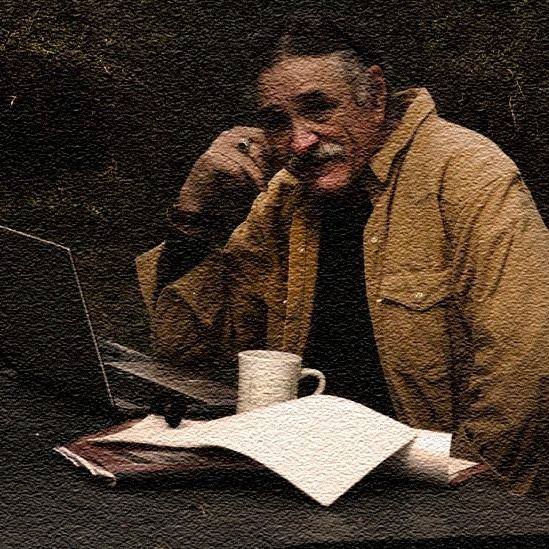
“When “genocide” develops within our Natural Habitats, in this case forced upon Wildlife and America’s Wild Horses, it must be stopped. Genocide is not of essential science, but rather from bigotry, ignorance, and of profound bias. Neither is it inclusive of ethical standards, necessity, nor of science. People must look at it with “open-eyes”, not minimize its tremendous impact, nor refer to it as humane-responsibility, or worse yet, as some type of essential science of necessity for management purpose (a lie or false narrative), which disqualifies it as a lands management tool or wildlife management tool.” – John Cox, Cascade Mountains
As a War Veteran, I am disgusted in total by what I’m seeing within corrupted government agencies as well as corrupt and commercialized non-profits today. In particular, directly involving Wild Horses as well as our nation’s Public Lands. I am seeing we have lost perspective, in our very Freedoms of our Lands, as well as take-issue at being unrepresented, often not represented what so ever within these issues, by corrupted politicians’. Our politician’s also take part in these corrupted endeavors currently ongoing within the government’s Grazing Permit Programs and Public Lands Management.
In my perspective, the destruction brought upon the land, water, wildlife and Wild Horses in particular, was and remains an act of violence against these living communities. I then find, through research and other reference materials over the centuries’, that this violence considered nothing less than an act of genocide. Although, the study of genocide and our current responses to it are still largely colonial and anthropocentric.
I want to make it clear that this destruction of Wild Horses, our lands, and our water ways constitute forms of genocide according to metaphysics combined with a diabolical and bias form of noteworthy reality, which is based upon total ignorance – or, as I like to say, people who do not know what it is they do not know, and unwilling to find out.
In environmental studies and alongside cultural genocide studies, the destruction of wildlife / Wild Horses, and our natural resources, is typically treated as a separate, but related phenomenon—ecocide, or the destruction of a species of nonhuman-nature.
In my mind this remains non-definitive, consequently, we find the terms challenging, at best. Resolution, when never admitting the ongoing genocide even exists, remains an inappropriate response toward resolution — i.e. pesticide or referenced as Immunocontraceptive (although, Immunocontraception is a birth control method that uses the body’s immune response to prevent pregnancy, we find the registered Pesticide they use actually destroys the immune system — so much for the term Immunocontraceptive, as it is, precisely, a False Narrative, and yet another erroneous use of either of the terms to work, with the other, in truth directly in opposition to the other) is simply a false narrative and misuse of both terms — I find the use of Pesticides simply resolves nothing, and pollutes our Natural Environment even worse than previously done within many decades past.
Then the other reality exists, and government, alongside commercialized non-profits, well, they attempt resolutions toward their own lies, rather than approach the obvious truth, at all. This is quite costly to American Taxpayers. One cannot resolve a lie; but when the lie perpetuates larger budgets for government agencies, as well as perpetuates further profit for commercialized non-profits and their salaries, as well as their advertising dollars to obtain donations, and currently more government grants, only then does the genocide continue – never to be admitted as such!
Recognizing that ecocide is a form of genocide challenges the anthropocentricism implicit in the current definition of genocide, which expands the concept of genocide without significantly altering its official legal definition. The superior definition of genocide, then all-inclusive of ecocide, beyond a doubt. Part two up and coming . . . as genocide of our Wild Horses Continue. — Article: John Cox, Cascade Mountains
Bibliography
Alvarez, Alex. Native America and the Question of Genocide. Lanham: Rowman & Littlefield, 2014.
Anderson, Joyce Rain. “Walking with Relatives: Indigenous Bodies of Protest.” In Unruly Rhetorics: Protest, Persuasion, and Publics. Edited by Jonathan Alexander, Susan C. Jarrett, and Nancy Welch, 45-59. Pittsburgh: University of Pittsburg Press, 2018. Doi: 10.2307/j.ctv75d8pr.6
Atleo, Eugene Richard (Umeek). Tsawalk: A Nuu-chah-nulth Worldview. Vancouver: UBC Press, 2004.
Barsh, Russel. L. “Forests, Indigenous Peoples, and Biodiversity.” Global Biodiversity 7, no. 2 (1997),
Brown, LaDonna. “The Chickasaw Creation Story.” Chickasaw TV Video Network. November 7, 2013. Video, 00:01:37. Accessed July 26, 2020. https://www.chickasaw.tv/videos/the-chickasaw- creation-story.
Burkhart, Brian. Indigenizing Philosophy through the Land: A Trickster Methodology for Decolonizing, 20-24.
Environmental Ethics and Indigenous Futures. East Lansing: Michigan State University Press, 2019. Doi: 10.14321/j.ctvkjb3xp
Cajete, Gregory. Native Science: Natural Laws of Interdependence. Sante Fe: Clear Light Publishers, 2000.
Card, Claudia. “Genocide and Social Death.” In Genocide’s Aftermath: Responsibility and Repair. Edited by Claudia Card and Armen T. Marsoobian, 10-26. Malden: Blackwell Publishing, 2007.
Carleton, Ken. “Nanih Waiya: Mother Mound of the Choctaw,” The Delta Endangered 1, no.1 (Spring 1996). Accessed July 16, 2020. https://www.nps.gov/archeology/cg/vol1_num1/mother.htm.
Cook, John R. The Border and the Buffalo: An Untold Story of the Southwest Plains. Chicago: Lakeside Press, 1938.
Cordova, Viola F. “What Is the World?.” In How It Is: The Native American Philosophy of V.F. Cordova. Edited by Kathleen Dean Moore, Kurt Peters, Ted Jojola, and Amber Lacy, 100-106. Tucson: University of Arizona Press, 2007.
Cronon, William. Changes in the Land: Indians, Colonists, and the Ecology of New England. New York: Hill and Wang, 2003.
Dary, David A. The Buffalo Book: The Full Saga of the American Animal. Sage Books, 1989.
Deloria Jr., Vine. “Relativity, Relatedness, and Reality.” In Spirit and Reason: The Vine Deloria,Jr., Reader. Edited by Barbara Deloria, Kristen Foehner, and Sam Scinta, 31-39. Golden:Fulcrum Publishing, 1999.
Deloria Jr., Vine and Daniel R. Wildcat. Power and Place: Indian Education in America. Colorado: Fulcrum Publishing, 2001.
Dowie, Mark. Conservation Refugees: The Hundred-Year Conflict between Global Conservation and Native Peoples. Cambridge: MIT Press, 2009. Doi: 10.7551/mitpress/7532.001.0001
Fitzgerald, David and Linda Hasselstrom. Bison: Monarch of the Plains. Portland: Graphic ArtsCenter Publishing Company, 1998.
Gone, Joseph P. “Colonial Genocide and Historical Trauma in Native North America: Complicating Contemporary Attributions.” In Colonial Genocide in Indigenous North America. Edited by Andrew Woolford, Jeff Benvenuto, and Alexander Laban Hinton, 273-291. Durham: Duke University Press, 2014. Doi: 10.1215/9780822376149-013
Green, Richard. “Moundville: Home of Prehistoric Chickasaws?” Chickasaw TV Video Network, October 9, 2017. Video, 00:01:22. Accessed July 26, 2020. https://www.chickasaw.tv/videos/moundville-home-of-prehistoric-chickasaws.
Grinde, Donald A. and Bruce E. Johansen. Ecocide of Native America: Environmental Destruction of Indian Lands and Peoples. Santa Fe: Clear Light Publishers, 1995. Eichler©2020 Genocide Studies and Prevention 14, no. 2 https://doi.org/10.5038/1911‑9933.14.2.1720120
Hämäläinin, Pekka. “The First Phase of Destruction: Killing the Southern Plains Buffalo, 1790-1840.” Great Plains Quarterly 21, no. 2 (April 1, 2001), 101-114.
Higgins, Polly. Eradicating Genocide: Laws and Governance to Prevent the Destruction of Our Planet. London: Shepheard-Walwyn LTD, 2010.
Hogan, Linda. “First People.” In Intimate Nature: The Bond between Women and Animals. Edited by Linda Hogan, Deena Metzger, and Brenda Paterson, 6-19. New York: Fawcett Columbine, 1997.
Hubbard, Tasha. “Buffalo Genocide in Nineteenth-Century North America: ‘Kill, Skin, and Sell.’” In Colonial Genocide in Indigenous North America. Edited by Andrew Woolford, Jeff Benvenuto, and Alexander Laban Hinton, 292-305. Durham: Duke University Press, 2014. Doi: 10.1215/9780822376149-014
Isenberg, Andrew C. The Destruction of the Bison: An Environmental History, 1750-1920. New York: Cambridge University Press, 2000. Doi: 10.1017/CBO9780511549861 Jacob, Michelle M. Indian Pilgrims: Indigenous Journeys of Activism and Healing with Saint Kateri Tekakwitha. Tuscon: University of Arizona Press, 2016.
LaDuke, Winona. All Our Relations: Native Struggles for Land and Life. Massachusetts: South End Press, 1999.
Lemkin, Raphaël. Axis Rule in Occupied Europe. New Hampshire: Rumford Press, 1944.
Lewis, Henry T. “A Parable of Fire: Hunter Gatherers in Canada and Australia.” In Traditional Ecological Knowledge: A Collection of Essays. Edited by Robert. E. Johannes, 7-20. Cambridge: ICUN, 1989.
McPhereson, Dennis H. and Douglas J. Rabb. Indian from the Inside: Native American Philosophy and Cultural Renewal. 2nd ed. Jefferson: McFarland & Co., Inc., 2011.
Moses, Dirk A. “Empire, Colony, Genocide: Keywords and the Philosophy of History.” In Empire, Colony, Genocide: Conquest, Occupation, and Subaltern Resistance in World History. Edited by A. Dirk Moses, 3-54. New York: Berghan Books, 2008.
Merriam-Webster.com Dictionary, s.v. “Landscape.” Accessed July 27, 2020. https://www.merriam-webster.com/dictionary/landscape.
Neuman, Roderick. Imposing Wilderness: Struggles over Livelihood and Nature Preservation in Africa. Los Angeles: University of California Press, 1998.
Norton-Smith, Thomas M. The Dance of Person & Place: One Interpretation of American Indian Philosophy. Albany: State University of New York Press, 2010.
Pierotti, Raymond. Indigenous Knowledge, Ecology and Evolutionary Biology. New York: Routledge, Taylor and Francis Group, 2011. Doi: 10.4324/9780203847114
Pierotti, Raymond and Daniel Wildcat. “Traditional Ecological Knowledge: The Third Alternative (Commentary).” Ecological Applications 10, no. 5 (October 2000), 1333-1340. Doi: 10.1890/1051-0761(2000)010[1333:TEKTTA]2.0.CO;2
Short, Damien. Redefining Genocide: Settler Colonialism, Social Death, and Ecocide. London: Zed Books, 2016.
Simpson, Leanne Betasamosake. Dancing on Our Turtle’s Back: Stories of Nishnaabeg Re-creation, Resurgence, and a New Emergence. Winnipeg: Arbeiter Ring Publishing, 2011.
———-. As We Have Always Done: Indigenous Freedom Through Radical Resistance. Minneapolis:University of Minnesota Press, 2017.
Smits, David D. “The Frontier Army and the Destruction of the Buffalo: 1865-1883.” Western Historical Quarterly 25, no. 3 (Autumn 1994), 312-338. Doi: 10.2307/971110 United Nations. General Assembly resolution 260, Convention on the Prevention and Punishment of the Crime of Genocide. December 9, 1948. UN Doc. A/RES/260(III). Accessed April 24, 2019. https://www.un.org/en/genocideprevention/documents/atrocity-crimes/Doc.1_Convention%20on%20the%20Prevention%20and%20Punishment%20of%20the%20 Crime%20of%20Genocide.pdf
Watts, Vanessa. “Indigenous Place-Thought and Agency Amongst Humans and Non-humans (First Woman and Sky Woman Go on a European World Tour!).” Decolonization: Indigeneity, Education & Society 2, no. 1 (2013), 20-34. Wilderness Act, 16 U.S.C. 1131-1136 (1946), accessed July 30, 2020 https://www.nps.gov/orgs/1981/ upload/W-Act_508.pdf
White, John H. “Hunting Buffalo from the Train: Buffalo, Iron Horses, and the Path toward Extinction.” Railroad History 201 (Fall-Winter 2009), 42-49. Ecocide Is Genocide©2020 Genocide Studies and Prevention 14, no. 2 https://doi.org/10.5038/1911‑9933.14.2.1720121
Whitt, Laurelyn. Science, Colonialism, and Indigenous Peoples: The Cultural Politics of Law and Knowledge. New York: Cambridge University Press, 2009. Doi: 10.1017/CBO9780511760068
Zimmerer, Jürgen. “Colonialism and the Holocaust: Towards an Archaeology of Genocide.” Genocide and Settler Society: Frontier Violence and Stolen Indigenous Children in Australian History. Edited by A. Dirk Moses, 49-76. New York: Berghahn Books, 2004.
 Preservation of America's Wildlife