RSS

Tag Archives: travel

Baiting of Wildlife — Hunter’s Rancher’s Exploitation at its Worst — Ethics? Abuse? Psychotic Behavior’s?

Research / Written
by

John Cox, M.A. C/M

Yes, in the Western US, ranchers and government agencies sometimes use specific baiting techniques, including (pigs cattle) or other meat or fruit baits, to lure and then trap, poison (historically), or shoot predators (historically) like wolves, coyotes, and lions, though methods are evolving towards non-lethal deterrence like livestock guardian animals or herding strategies to protect cattle from predation. 

We can take it a step further, and observe the situation in Northern California (as one of the most current example’s of corrupti0on and exploitation via misinformation), to be very exploitative.  We find Baiting Wolves, for example (less than 70 wolves in the entire state of California) due to the supposed over-population of Wolves there today.  Problem is, we see them attracting Wolves, with several types of Bait, dead cows, dead pigs, et al.  The circumstance attracts Wolves to the Ranch sites, no doubt.  The ranchers then place their sickly – no sale cattle onto isolated parts of the range, or dead cows, and soon the attracted Wolves from the other Bait, roams around, nipples on the dead cows or calves, and blamed for the Kills.  Did you know the Ranchers obtain full value of a healthy Cow, subsidies (sometimes up to $10,000) when they can blame a Wolf?

One of the problems with this situation remains, and we see it in Northern California, among other States and areas, ongoing.  Predators’, a common knowledge circumstance, is the fact they recall, via their survival skill-sets, “location and “what” was found in any given area.  This means they will go back to the area they found survival sustenance.  The ranchers’ know this, and of course, the corrupted ranchers take advantage of the Predator Reimbursement Programs, quite often. 

Here are several situations that can develop into Predators, either returning, or new Predators passing through the area.  Right now this conversation is about Wolves.  But we also acknowledge Cougar, Bear, and other Predators doing similar activity.  So the ranchers, have nothing, or no one else to really blame for these problems – and lack of ingenuity, or inattentive to their herd when they had just, within a year to 4 years, set out bait for any situations below, actually created their own mess they see themselves experiencing today – If they are telling the public the truth? We find it rather not so ironic, they are not being truthful at all.

How Cattle/Meat is Used for Control:

  • Baiting Traps/Poison (Historical/Limited): In the past (and sometimes still today, though less common due to regulations), hunters or government agents would place poisoned or baited carcasses (like cattle or deer) to attract and kill predators.
  • Attracting for Shooting: A carcass can serve as a strong attractant, drawing predators to a specific location where sharpshooters can then eliminate them, especially for problem animals. 

Modern Approaches & Conflicts:

  • Predator Control Programs: Agencies like USDA APHIS Wildlife Services manage predator conflicts, sometimes using lethal removal, which sparks debate.
  • Non-Lethal Deterrents: Many ranchers now focus on methods like using guardian dogs, llamas, donkeys, or training cattle to form defensive groups to reduce livestock loss without killing predators.
  • Feral Cattle Issues: Sometimes, feral (unowned) cattle themselves become targets for removal, often through aerial shooting, which is separate from predator control but involves shooting cattle in the West. 
  • Often ranchers will retrieve the dead cattle, bait predators to their range / grazing pasture, and use as bait – We are not sure how often this happens, but we know, from discussions with others, it does happen.

In essence, while using livestock as bait for predators isn’t the only method, it’s a known part of the history and ongoing, often controversial, predator management efforts in the Western U.S. . . .  We find the practice simply opens the door to misinformation, at times, about Wolves, Cougar, Bear, and other predators.

baiting techniques, including

(like cattle) or meat baits, to lure and then trap, poison (historically), or shoot predators like wolves, coyotes, and lions, though methods are evolving towards non-lethal deterrence like livestock guardian animals or herding strategies to protect cattle from predation. 

How Cattle/Meat is Used for Control:

  • Baiting Traps/Poison (Historical/Limited): In the past (and sometimes still today, though less common due to regulations), hunters or government agents would place poisoned or baited carcasses (like cattle or deer) to attract and kill predators.
  • Attracting for Shooting: A carcass can serve as a strong attractant, drawing predators to a specific location where sharpshooters can then eliminate them, especially for problem animals. 

Modern Approaches & Conflicts:

  • Predator Control Programs: Agencies like USDA APHIS Wildlife Services manage predator conflicts, sometimes using lethal removal, which sparks debate.
  • Non-Lethal Deterrents: Many ranchers now focus on methods like using guardian dogs, llamas, donkeys, or training cattle to form defensive groups to reduce livestock loss without killing predators.
  • Feral Cattle Issues: Sometimes, feral (unowned) cattle themselves become targets for removal, often through aerial shooting, which is separate from predator control but involves shooting cattle in the West. 

In essence, while using livestock as bait for predators isn’t the only method, it’s a known part of the history and ongoing, often controversial, predator management efforts in the Western U.S.”  —  John Cox, M.A. C/M

 
Leave a comment

Posted by on January 22, 2026 in Uncategorized


Tags: , , , ,

Welfare Ranching on Public Lands, is Needed or Taxpayer Funded Corruption?

Investigated and Written by
John W. Cox

“The actual costs to taxpayers for the public lands grazing program, direct costs to Taxpayer’s.  Not shown are the destructive elements, costly and according to science, common sense, and observed quite abundantly by many (i.e. Land Desertification, et al. Public Lands), as well as water-wells owned by ranchers yet on Our Public Lands and rancher’s bill Taxpayers through the BLM to water their own cattle, among other situations, that cost Millions yearly.

Studies and government reports indicate that the federal public lands grazing program results in an annual net loss to taxpayers, but the amounts are in the hundreds of millions of dollars, in Direct-Subsidies alone . . .

(OF NOTE) Also keep in mind, when perusing this article, In the U.S. alone, one study estimated that — 194.7 million kg (i.e. 194,700 tons of beef) is wasted due to discoloration at the retail level, representing a loss of about 780,000 cattle annually. Other estimates suggest the U.S. wastes approximately 21% of all meat consumed at both retail and consumer levels . . .  So, is the Grazing Permit Program on Public Lands viable, or is it just a situation of serious Profiteers, found a weak spot in government, to walk-in and take advantage of Taxpayer Money under the guise of some type of historical myth.  Welfare Ranching (Public Lands Ranching) is only a mere 4% of the Ranching in America – and sales less than 1% yearly, according to USDA Domestic Receipts of Public Lands Beef.

RANCH SUBSIDIES ONLY

Annual Cost to Taxpayers: The direct government expenditures to administer the public land grazing program (by agencies like the BLM and Forest Service) exceed the grazing fees collected. The net loss to taxpayers is estimated at a minimum of $123 million annually, and possibly over $500 million annually when indirect costs (such as environmental damage mitigation, predator control, and wildfire suppression related to grazing) are included).

Total over a decade: An analysis in 2015 estimated the cost to taxpayers at around $500 million every year for the prior decade, totaling roughly $5 billion over those ten years. We question that, as perhaps a falsified number, as we have observed in other USDA costs to cover-up expenditures that are obviously corrupted, and significant totals left-out.

Broader Livestock Subsidies: EWG (Environmental Working Group) analyses of all USDA livestock subsidies across the U.S. (which includes various disaster assistance, commodity purchases, and pandemic relief payments to all livestock operators, not just those on public lands) found a total of approximately $72 billion between 1995 and 2023.

Total Farm Subsidies: Total federal farm subsidies for all agricultural activities (including massive commodity crops like corn and soybeans) across the U.S. were $478 billion between 1995 and 2021. 

We also find the corruption, and disinformation from the BLM’s Grazing Permit Programs to be, by far, also costly to American Taxpayers, in the $-billions.  For example the Wild Horse and Burro Program Exceeds

WILD HORSE AND BURRO PROGRAM

(Keep in mind, this is mostly from Grazing Permit Rancher Program – and their demands, assimilated on lies and bogus / Inaccurate Wild Horse Herds Counts – Yes, Corruption)

The annual cost for the Wild Horse and Burro Program is over $100 million, with figures varying by year. For example, expenditures were $112.3 million in 2021 and $154.8 million in 2024. A majority of these funds are used for off-range holding and care for horses and burros not placed in private homes, with costs also covering gathers, adoptions, and fertility control. 

2024: Approximately $154.8 million was spent, with a significant portion going to housing over 66,000 horses and burros in holding pens.

2023: The cost was $108.5 million for holding 62,000 wild horses. 

2021: Total expenditures were $112.273 million.
$77.7 million (64%) was for off-range holding.
$15.1 million (12%) went to program support and overhead
$14.7 million (12%) was for adoptions and sales.
$8.5 million (7%) was for gathering animals.

2017: The program cost $82.567 million.
$48.6 million was used for caring for horses in holding facilities.
$7.9 million was for adoptions.
$4.2 million was for removing horses from rangelands.

The costs are driven largely by the need to care for the large number of animals in off-range facilities, though efforts like the Adoption Incentive Program aim to reduce long-term holding costs through private adoptions. . . 

We actually observe the consequences of so much wasteful expenditures, and Wild Horses placed into Holding, et al., for nothing less than derived from False Information – The Welfare Ranchers hold the BLM in captivity, via a very convoluted and corrupted employee structure / Administrative Structure . . . American’s Public Lands . . . i.e. Federal Court Cases associated with these groups tell us volumes of Mia-information, within a Dis-information Format of Campaigns, advertising as well as sublimating BLM/Forestry Misinformation – as direct evidence, for several BLM / Forestry Programs.

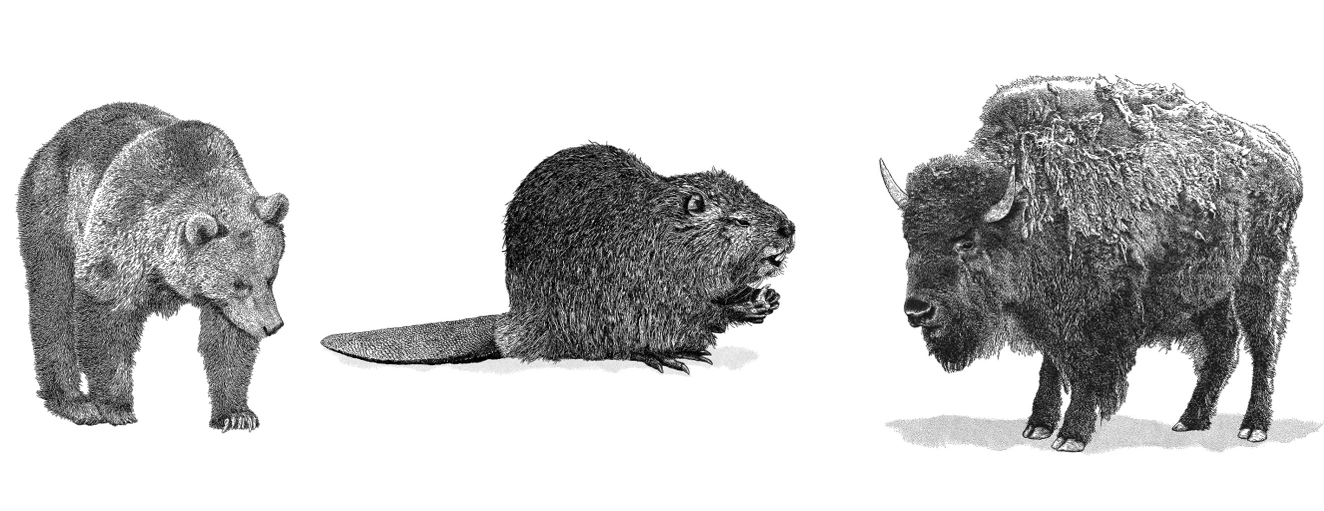
Currently, we find many moire attacks upon Our Natural Wildlife around or within Our Public Lands areas – For Example Wolves, Beaver, Cougar, Bear, whose domains in Wilderness basically invaded by Public Lands Ranching – or, 4% of the cattle ranching Industry in America, with domestic Sales lower than 1% yearly in beef products – and throw-away margins of Beef yearly, ”  —  John Cox, M.A. C/M


Leave a comment

Posted by on November 7, 2025 in Uncategorized


Tags: , , ,