RSS

Monthly Archives: September 2025

We are All Independent — It is What Makes Culture, Independent People Coming Together

Written by
John Cox, M.A. C/M

Let me take you back, way back when, in 1977, and a memorable learning experience with a horse. Unforgettable. . . I rode off and on at that time, but never owned a horse directly. As well, I had spent many years around the Mount St. Helens landscape, knew it well, on the valley flats and on the mountains, being in the area, often, whenever I had time off to do so. I rode a friend’s horse that I had ridden a couple of times over the years, a good quarter-horse and paint gelding, and very forgiving. Certainly, patient with an inexperienced rider.

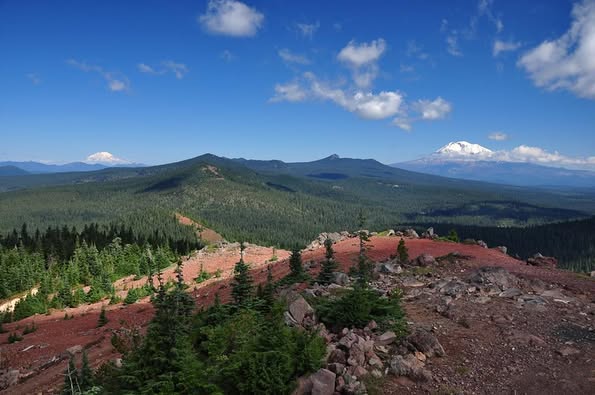
We were at a place called Indian Racetrack, near Red Mountain, with Mount St. Helens, before it erupted, in the landscape, among other volcanic mountain peaks, all in view from the valley floor. There were logging roads into the area, with much of it already logged-out, and large meadows we camped at often.

I also, unknowingly LOL, become more of an environmentalist, when I saw first-hand the direct effects of human-kind. I understood our blatant ignorance toward the things we suppose we could sacrifice, while making a few bucks. It was easy to understand, we could do far better . . . Without the sacrifices being made, even today.

Anyway, we approached a dry creek bed, with rounded river-rock, we had to pass over. It was part of the trail, and a situation I run across many times – just part of what trail riding in the Pacific Northwest always has been and is today. Challenging but beautiful. But this is the type of circumstance we learn, many different things, all at once. I learned one can trust a horse at that time, by doing one simple thing.

This is one lesson that stuck with me from then on, when I dealt with a horse; well, actually, all of my horses I owned over the years – Trust. What I put intro it, I got out of it “ten-fold”, with a horse, once I bonded with them. The person I was with had a few years riding and owning horses, so I trusted what she had to say, as well.

“Drop the Reins is the que”, she said.

I looked at the rocks the horse was about to cross, shrugged a little, and dropped the reins. It was obvious the horse had to navigate the rocks by feel, at the same time, keeping his balance with me on his back – I understood quite well, to relax, comfortably (LOL), while the horse took control.

This was also a big lesson for me, to allow something else to control the situation, not of human-kind, but of animal-kind. A real trust builder, for sure. Suddenly those rocks looked like huge lion’s teeth, ready to chew-up and spit-out anything that fell onto them. I looked at my reins. I looked at the rocks.

I forget what it was I mumbled, as my partner looked around, “I’ve done this on that horse a thousand times,” she said, and laughed. Suddenly her laugh was not pleasant to hear, but rather satanic, or something like it. I chalked that up, to perhaps, we should not have smoked that last joint.

The horse navigated through the rocks quite well. No incident. Nothing happened. We were on the other side, alive, unbroken, and life worth living. The reins once again in my hands. What I noticed, and recall quite well, was the fact, lesson learned, and I did not have to balance on my reins, nor, hold my reins tight. I pushed forward, and softened the reins, and realized how responsive my horse became, the instant I done so. It was an entire different ride from then onward.

The ride was far more enjoyable, the forest once we got into it, even greater. After that few days riding those trails daily, and camping near streams, near hot-springs where the boulders actually made it relaxing to sit within, or, near beautiful meadows, life was good. I also developed hip-leg-knee action, rather than using the reins. This is also why I speak about experience, a lot, in my writing about horses. Because it was that experience, that foundation of finally taking riding a horse more serious, being on one every day for nearly two weeks.

I rode, from then on, whenever I could, and learned a lot of what I know first-hand and on horseback, in the mountains, on and off the trails. I often wondered, my PTSD at that time, little was known about it, but I knew the horses I was around helped me.

Like driving a car, riding a motorcycle, or big truck, you have to do it to understand completely, how it’s done. Reading books is one thing, experience quite another thing and needed. That was, truthfully, the beginning of my relationships with horses, and with that foundation, wanting to learn more about them. Wanting to become better at it. Making it a natural-progression of living life, with horses and dogs, and in the countryside . . .” – John Cox, M.A. C/M

 
1 Comment

Posted by on September 21, 2025 in Uncategorized


Tags: , , , ,

Understanding Terminology to Correct Management of Our Natural Resources and Wildlife — A Necessity

Assimilated and Written by
John Cox, M.A. C/M

“In the communication field, we have several direct-connections to psychology. After all, communication, you and I discussing things, is derived from several psychological-patterns. And, as we know, psychology pertinent to understand our Universe within the complex of survivability, sustainability, comforts, respect for life, respect for Nature, among other things, as well as all the attributes that form psychological, and what we refer to as, Dysfunction.

When we place theses situations into terminology, we find deductive reasoning to be refined to a point of understand dysfunctional attributes, especially toward decision making.

Often, the more we know, the more we experience life and the things we are interested in knowing about, knowledgeably:

1. One must be open-enough to accept all the positive and negative nuances of the subject. Our minds need this constant flow, to make knowledgeable decisions — separating the affirmed values being significant, and usable, or insignificant, and experience has shown us to be hurtful, or non-usable.

2. Bias, ignorance, and bigotry, is when we shove-aside, what we suppose is irrelevant, as if nonexistent, for an excuse, in this example or scenario, to abuse, kill, profit from, or debate an issue we know nothing about.

We infuse these patterns into our own knowledge-base. When we have psychological problems, whether physical or within a mind-set only circumstance, many classifications of terms come to mind. . .

We then interpret, how we understood this knowledge of Nature, for example, and wildlife. We interpret this information into our knowledge-base. We then communicate it orally, or within written form . . . But what are we communicating? What are the definitions to describe awkward or troubling interpretations of our Nature that surrounds us, or the Wildlife that lives within it? To understand this, we ask the questions.

Perhaps classifying these interpretations into terms; which, we can then understand how those with little to no knowledge, or those with mental disoriented knowledge, due to bias, bigotry, or plain old ignorance, develop their idiotic behaviors and flawed, disagreeable decision making processes, especially toward Nature and our Wildlife. Exempt from this discussion are psychopathic behaviors as well as sociopathic behaviors, alongside schizophrenic behavior, or manic depression behavior, et al.

Now we isolate this circumstance, more so, to answer the question how many interpret correctly, or within a manageable level of truth, Nature within Nature and the Wildlife that lives within Nature, correctly? This is where we can then accept or deny whether a mind-set, and the knowledge they display, orally for example, to us when discussing things, is functional or dysfunctional within that individuals’ interpretation of Nature and Wildlife.

Here we ask the appropriate questions, to search for the answer, whether or not within research, or, just daily communication, with others. We see first hand, opinion generated, or books read but not fully understood, and those with no experience, debate and argue points with experienced people, needlessly. Most want to learn no more, because they assume they already know it all.

There is no single term for those who deny that nature exists

in nature. However, several philosophical concepts are relevant, depending on the specific argument being made:

Solipsism: An extreme form of skepticism in which an individual believes that only their own mind is certain to exist. In this view, the external world, including nature, is merely a product of one’s consciousness.

Metaphysical Nihilism: The philosophical position that a world entirely empty of concrete objects (i.e., nothing at all) is possible. The more radical version of this view suggests that the universe itself is an illusion, and thus, nothing is real.

Idealism: The belief that the physical world is not as fundamental as mental reality. Certain forms of idealism argue that objects only exist as long as they are perceived. In this context, the existence of nature would be dependent on its being thought or perceived by a mind.

Antinaturalism / Supernaturalism: While not directly denying the existence of the natural world, this view holds that something beyond the natural order is real. It rejects the idea that nature is the only or ultimate reality and can be a stepping stone to dismissing nature’s importance.

Linguistic Confusion: In many cases, denying that “nature exists in nature” can be a philosophical riddle or a thought experiment about the nature of reality and our perception of it. The statement itself can be interpreted as a logical puzzle rather than a firm philosophical or an in-reality stance . . . ?” — John Cox, M.A. C/M — Preservation of America’s Wildlife

 
Leave a comment

Posted by on September 21, 2025 in Uncategorized


Tags: , , , ,