RSS

Tag Archives: animals

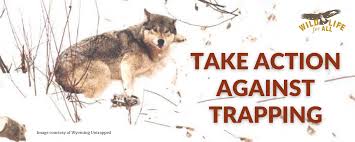
Public Lands Need Wolves — Welfare Ranching is Not necessary, Destructively Antiquated

Research & Article
John Cox M.A. C/M

“We find lot of Public information about Wolves, on Public Lands, most often driven by Fear, or Group Hysteria (i.e. Northern California most recently). The fact is, simplified, Welfare Ranching on Public Lands, and their need to rid our Public Lands of much of our Nation’s Wildlife, is not represented by science, but rather, misinformation — i.e. about Wild Horses, Bear, Cougar, and many other Wildlife that must Co-Exist on our Public Lands, for a healthy environment. Let’s discuss Wolves here . . .

Wolves provide significant ecological benefits to public lands by acting as apex predators that restore balance to ecosystems, fostering biodiversity, and improving habitat health through the regulation of prey populations. In contrast, livestock ranching on public lands is often associated with negative impacts such as overgrazing, habitat degradation, and biodiversity loss. 

Ecological Benefits of Wolves

  • Trophic Cascades: Wolves prevent overgrazing by elk and deer, allowing vegetation like willow and aspen to recover, which improves habitat for other species.
  • Wetland Restoration: By reducing elk pressure in riparian areas, wolves contribute to increased willow growth, which supports beaver populations and creates healthier, more resilient wetlands.
  • Disease Control: Wolves help manage wildlife populations by preying on weak or diseased animals, such as those with chronic wasting disease.
  • Ecosystem Services: The presence of wolves can reduce deer-vehicle collisions and provide carrion for scavengers, supporting a more diverse ecosystem. 

Impacts of Public Lands Ranching

  • Environmental Degradation: Livestock grazing can lead to compacted soils, damaged stream banks, and the loss of native vegetation.
  • Habitat Conflicts: Cattle often compete with native wildlife for forage and water in sensitive, arid, or high-elevation habitats.
  • Management Costs: Ranching on public land can require significant, costly efforts to mitigate interactions with predators, often requiring compensation programs for livestock losses.
  • Sustainability Challenges: Some studies suggest that the ecological cost of grazing in certain public land areas outweighs the economic benefit, particularly when compared to the restorative impact of natural predator-prey dynamics. 

While ranching has deep roots in Western culture and provides economic value, research increasingly highlights that wolves offer superior, natural, and cost-effective management for restoring and maintaining public land ecosystems.” — John Cox, M.A. C/M

 
Leave a comment

Posted by on January 23, 2026 in Uncategorized


Tags: , , , ,

Baiting of Wildlife — Hunter’s Rancher’s Exploitation at its Worst — Ethics? Abuse? Psychotic Behavior’s?

Research / Written
by

John Cox, M.A. C/M

Yes, in the Western US, ranchers and government agencies sometimes use specific baiting techniques, including (pigs cattle) or other meat or fruit baits, to lure and then trap, poison (historically), or shoot predators (historically) like wolves, coyotes, and lions, though methods are evolving towards non-lethal deterrence like livestock guardian animals or herding strategies to protect cattle from predation. 

We can take it a step further, and observe the situation in Northern California (as one of the most current example’s of corrupti0on and exploitation via misinformation), to be very exploitative.  We find Baiting Wolves, for example (less than 70 wolves in the entire state of California) due to the supposed over-population of Wolves there today.  Problem is, we see them attracting Wolves, with several types of Bait, dead cows, dead pigs, et al.  The circumstance attracts Wolves to the Ranch sites, no doubt.  The ranchers then place their sickly – no sale cattle onto isolated parts of the range, or dead cows, and soon the attracted Wolves from the other Bait, roams around, nipples on the dead cows or calves, and blamed for the Kills.  Did you know the Ranchers obtain full value of a healthy Cow, subsidies (sometimes up to $10,000) when they can blame a Wolf?

One of the problems with this situation remains, and we see it in Northern California, among other States and areas, ongoing.  Predators’, a common knowledge circumstance, is the fact they recall, via their survival skill-sets, “location and “what” was found in any given area.  This means they will go back to the area they found survival sustenance.  The ranchers’ know this, and of course, the corrupted ranchers take advantage of the Predator Reimbursement Programs, quite often. 

Here are several situations that can develop into Predators, either returning, or new Predators passing through the area.  Right now this conversation is about Wolves.  But we also acknowledge Cougar, Bear, and other Predators doing similar activity.  So the ranchers, have nothing, or no one else to really blame for these problems – and lack of ingenuity, or inattentive to their herd when they had just, within a year to 4 years, set out bait for any situations below, actually created their own mess they see themselves experiencing today – If they are telling the public the truth? We find it rather not so ironic, they are not being truthful at all.

How Cattle/Meat is Used for Control:

  • Baiting Traps/Poison (Historical/Limited): In the past (and sometimes still today, though less common due to regulations), hunters or government agents would place poisoned or baited carcasses (like cattle or deer) to attract and kill predators.
  • Attracting for Shooting: A carcass can serve as a strong attractant, drawing predators to a specific location where sharpshooters can then eliminate them, especially for problem animals. 

Modern Approaches & Conflicts:

  • Predator Control Programs: Agencies like USDA APHIS Wildlife Services manage predator conflicts, sometimes using lethal removal, which sparks debate.
  • Non-Lethal Deterrents: Many ranchers now focus on methods like using guardian dogs, llamas, donkeys, or training cattle to form defensive groups to reduce livestock loss without killing predators.
  • Feral Cattle Issues: Sometimes, feral (unowned) cattle themselves become targets for removal, often through aerial shooting, which is separate from predator control but involves shooting cattle in the West. 
  • Often ranchers will retrieve the dead cattle, bait predators to their range / grazing pasture, and use as bait – We are not sure how often this happens, but we know, from discussions with others, it does happen.

In essence, while using livestock as bait for predators isn’t the only method, it’s a known part of the history and ongoing, often controversial, predator management efforts in the Western U.S. . . .  We find the practice simply opens the door to misinformation, at times, about Wolves, Cougar, Bear, and other predators.

baiting techniques, including

(like cattle) or meat baits, to lure and then trap, poison (historically), or shoot predators like wolves, coyotes, and lions, though methods are evolving towards non-lethal deterrence like livestock guardian animals or herding strategies to protect cattle from predation. 

How Cattle/Meat is Used for Control:

  • Baiting Traps/Poison (Historical/Limited): In the past (and sometimes still today, though less common due to regulations), hunters or government agents would place poisoned or baited carcasses (like cattle or deer) to attract and kill predators.
  • Attracting for Shooting: A carcass can serve as a strong attractant, drawing predators to a specific location where sharpshooters can then eliminate them, especially for problem animals. 

Modern Approaches & Conflicts:

  • Predator Control Programs: Agencies like USDA APHIS Wildlife Services manage predator conflicts, sometimes using lethal removal, which sparks debate.
  • Non-Lethal Deterrents: Many ranchers now focus on methods like using guardian dogs, llamas, donkeys, or training cattle to form defensive groups to reduce livestock loss without killing predators.
  • Feral Cattle Issues: Sometimes, feral (unowned) cattle themselves become targets for removal, often through aerial shooting, which is separate from predator control but involves shooting cattle in the West. 

In essence, while using livestock as bait for predators isn’t the only method, it’s a known part of the history and ongoing, often controversial, predator management efforts in the Western U.S.”  —  John Cox, M.A. C/M

 
Leave a comment

Posted by on January 22, 2026 in Uncategorized


Tags: , , , ,