RSS

Government Grazing Permit Programs on Public Lands – Corruption – Destruction – and Lies

By John Cox, M.A. C/M

I got out of my truck, jumped across the ditch and through the fence, and enjoyed the smell of good dirt, good sweet-grass, mixed. I looked over the flat and seen our 5 Bands of Wild Horses saved from bad supposed-rescues, and KB’s, and from the Welfare Ranchers wanting to kill them all, based on nothing more than their lie after lie. . . We, as the taxpayers of this land pay Ten-Fold for their lies. A little fog in the air, so it was misty. I had to wipe the moisture off my face with my handkerchief, occasionally, to keep it dry.

A small band near the fence, 2 mares, 2 strong-boned yearlings’, and a 2-year-old stallion about ready to leave his family band, glanced up, then back to grazing the grass. Further down the line, 4 more family bands, most a little larger than the band I stood next to, grazed their morning meal.

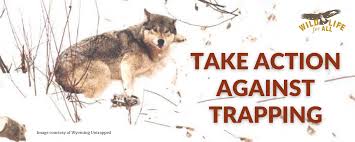
The environment peaceful. I watched two Wolves come out of the treeline across the pasture land. They passed through the horses, without a glimpse toward them. As fast as they appeared, they disappeared, into the treeline on other side of the pasture.

The horses, in the Band’s we have, have never had problems with Wolves. The private lands ranches we have the horses graze upon, have never had any problems with the Wolves; but yet, all of them I know, actually tend to their cattle, often, inclusive of watching the horses also. They never have any shortage of grass on their land. . . They do not receive subsidies, being private, so they work hard to keep their pasture lands healthy, and the wildlife diverse. In my mind, attending to the herds, moderate and not over-populated, whether horses or cattle, and things go well.

Any problems approached quickly, and on the spot. Sick cattle are tended to immediately, on the spot, and Vets called if and when needed. It is called, or referred to as, “Taking Care of their Business.” Sometimes difficult, and the weather not always good, but they are there. Where they and I disagree on somethings, other things we agree upon. By the way, the owners of the lands we graze our Bands of Horses upon, are all Vietnam Vets, I knew there, or met through others here. They, as I, respect the Western Ways, the Wild Horses and Wildlife out here, as we were all raised in the West.

Often when I pull-up, I also see deer, and even Elk, at times, grazing with the horses. And, standing around the two ponds not far from where I stood this day. The ponds have little to no damage, from the horses. I have seen this throughout the years.

I could smell the moist dirt. After dealing with it all, one achieves the sense of smell, to equate to the actual pH of the dirt. Just something a person picks-up after a while. Just to make a comment on a little science, good pasture soil has a balance of physical, chemical, and biological components: a favorable structure for root growth; as well, a sufficient supply of essential nutrients like nitrogen, phosphorus, and potassium; also, a healthy population of soil organisms and organic matter. Myself and others also check for the obvious characteristics of good drainage, adequate water-holding capacity, sufficient depth, and a balanced pH of about 5.5 – 6.5 .

I use to measure it, out of courtesy for the ranchers we place our Horse Bands upon, but over the years, very consistent. I can see it quite well, when a difference develops. So, myself and others, those of us who rescue horses and bring them to these ranches, observe the difference between what we see on those who depend on their own lands and pastures for their income, and those who receive subsidies from government agencies, as they overpopulate and destroy Our Public Lands. All of us here, who rescue Horses and the Ranchers, all agree upon this statement.

We also wonder about so much of the Wolf-Kills on Public Lands that have Grazing Permit Programs. We wonder about the kill-off the Welfare Ranchers state as necessary (or just gun-happy), as to whether true or not, of their facts: A single wolf pack in the Sierra Valley was responsible for at least 87 livestock deaths (70 confirmed) between September and October 2025 — So they say . . .

What these ranchers are stating, is that the Beyem Seyo Pack of Wolves, that contained two adults and six pups – 4 of which were killed – actually, the breeding pair and two juveniles. The bones from two more juveniles were found, as well, not so long ago . . . And supposedly 3 Wolves left from this pack. AND THIS IS THE TRUE ACTS, WE HEAR. . .

So, as taxpayers, and frankly I do not give a tinker’s damn if cattle were supposedly killed on private land or Public Lands (i.e. Our Lands), 8 (no zeros, but eight Wolves) 87 cattle. 70 Supposedly Confirmed?

From experienced Wolf Researchers, we find A wolf needs an average of 5 to 7 pounds of meat per day to survive and maintain health, but their diet is a “feast or famine” cycle, so they can also go days or weeks without eating after consuming up to 20 pounds in a single meal. While they can survive on less, 2.5 to 3.7 pounds daily, 5 to 7 pounds is needed for successful reproduction.

Something is wrong here, somehow or somewhere! A typical beef cow is between 1,000 and 1,800 pounds, but the average is around 1,400 pounds. Something smells like bullshit here! We are expected to believe Wolves ate (first 8 Wolves, then 4 Wolves, keep this in mind) killed or blamed (????) For 87 Cattle Dead, 70 of which supposedly Confirmed – and yet, they did not make the Confirmation Evidence Public – WE ALL WANT TO SEE IT! TAXPAYER’S WANT TRUTH. THIS IS 87,000 LBS OF BEEF KILLED – AND EVEN AT THE REALM OF WOLVES STUFFING THEMSELVES, EVEN GRIZZ DO NOT EAT THAT AMOUNT – AND WOLVES ARE A HELL OF A LOT SMALLER THAN GRIZZLY BEARS –

NOW IS ANYONE SMELLING BULLSHIT HERE? And the facts are just the facts that cannot be denied, and these Welfare Ranchers are in direct CONFLICT WITH THE TRUTH = FACT! It is what we refer to as Bullshit at the most greedy level we have, within our human population, because things killed unnecessarily to cover up their own corruption $$$. — John Cox, A Taxpayer tired of our tax-paid money — and our Wildlife — being taken advantage of by government Grazing Permit Programs

 
1 Comment

Posted by on November 29, 2025 in Uncategorized


Tags: , , , ,

The Balance of Nature Is Doing What It Does . . .

Article by
John Cox M.A, C/M

The “Balance of Nature” is nature, when left undisturbed, exists in a state of stable equilibrium through self-regulating processes . . .  Predator-prey relationships and food webs show us stability or instability, or worse.  Yes, Nature communicates with us, quite well – “if” or “when” we listen. Historically influential was the fact, we feared Nature in ancient times, when ignorance of Nature was the norm, our basic lack of understanding it, qualified by the mystery and a lack of knowledge to explain how the Natural Process of all living things worked. Those ideas and assuredly, beliefs, have been largely superseded by more modern ecological theories, such as dynamic equilibrium, lands and wildlife health, resilience theory, and science relationships toward research, data gathering, and substantial habitat design theories allowing Nature to take care of itself.  

The problems we find today is the fact many people do not understand the actual dynamics of the Balance of Nature. People confuse the “Balance of Nature” with whatever an individual finds necessary to explain their rhetoric — i.e. hunting, ranching, public lands industries, et al., habitat loss, et al.

Contemporary ecology views ecosystems as constantly changing and adapting, rather than being static and perfectly balanced all the time.  This does not mean human-involvement required; but rather, Nature establishes its parameters, and we balance it out with how we react, within the parameters of truthful and credible knowledge we obtain through our constant updating, using observation and a knowledgeable base of information. 

If Nature of any type, as we see today and yet ignored, is showing us destructive venues, through Wildlife going Extinct due to our actions, and other Terrestrial and Wildlife Environments reacting negatively, as well, then we are doing something wrong.  It becomes self-evident.

Key concepts of the Balance of Nature Theory

  • Equilibrium: The core idea is that ecosystems return to a stable state after a disturbance.  This means a problem exists, most often not to be ignored or explained away as if the Balance of Nature changes always – it does not, it reacts positively or negatively to our encumbrance.  This means monitoring and being “truthful” about our ecology, mandatory.  Ignorance is unacceptable in Nature. Nature does not understand Special Interest dynamics, or the encumbrance of over-population lies. . . . So one cannot state they support the Balance of Nature, yet involve themselves in the concept of ranching on Public Lands, or Hunting & Trapping across our Public Lands. These entities mentioned here, have become over the years, a burden to the Balance of Nature, and ignored, as Nature destroyed robustly, rather than those who create the burden, change. Ignorance and bias becomes evident, when the refusal, over all, remains unacceptable to those who destroy nature — yet, refer to themselves as Conservationists.

  • Predator-Prey Dynamics & Food Web: A key example is the relationship between predators and prey, where predators keep prey populations in check, which in turn prevents the over consumption of plants.  The living situation, of all life, predicated upon the support it obtains from each Ecological Habitat.  This also means one Ecological Habitat may differ, totally different within a wildlife or terrestrial presence sometimes 15 miles to 25 miles away.  Birth Rates for Wildlife may be totally different, as well.  In these cases, we find hunting and ranching cattle a disturbance, rather than a healthy circumstance that provides a healthy Ecological Habitat or positive Environmental impacts.  Just the opposite is true, as we fine through science – both disturbances antiquated, and the core negative result unhealthy for human’s, as well.

  • Historical roots: The concept can be traced back to ancient Greek philosophers and was later formalized in the 18th century, where early naturalists proposed that the “balance of the animal world” was maintained by a “curious harmony and just proportion” between the increase of animals and their life spans.  During the next 100 years, the numbers of all these species will fluctuate; yet none will increase indefinitely, and only a few will become extinct… Such ‘observations’ are made the basis for the statement that population size is ‘controlled’ or ‘regulated,’ and that drastic changes in size are the results of upsetting the ‘balance of nature.  The fact is, we cannot allow those with antiquated beliefs {only} whose foundations are created from imagination, or worse bis developed through ignorance.  This is when the occasion of observation becomes a sadness, as we are seeing our Lands and Wildlife be depleted for extreme population necessities (Elk, Deer, certain fish, and Cattle above all else), when in fact these extremes destroy more lands as a result.

Modern ecological view

  • Dynamic rather than static: Modern ecology views ecosystems as dynamic, meaning they are always changing and adapting, rather than being in a constant, static state of balance.  Here we can see the reasoning for the necessity of an acceptable process, a procedure that we can develop truth – without animosity, or hedging a little for a favored monetary arrangement – for industry or ability to control a population, via bias, rather than necessity – especially when no necessity exists.

  • Ecosystems as complex systems: Instead of a simple “balance,” scientists now see ecosystems as complex, constantly changing systems that adapt to new conditions.  Rewilding is a positive result to this situation today.  That is, when done correctly.  Infringement upon a correct methodology toward Rewilding has become challenging for many, due to several reasons.  The most serious is inexperienced people and those who lack education, both, attempt to Rewild, and it becomes a tragedy rather than useful.  For many reasons.

  • Human impact: The theory is often used in a conservation context, but it’s now understood that human activities can severely disrupt these dynamic systems, leading to negative outcomes, inevitable consequences that destroy, rather than influence productive Sustainably circumstances.  Often Wildlife Management, for example, takes the ancient path of belief, despite the conflicts with credible Conservation (refereeing to a group dynamic rather than a credible scientific reality, but an ancient fear-based reality that defies common sense — in a Pick-&-Choose Wildlife Management scheme, based upon Fear, or hunt Paradigms.  Disinformation campaigns the norm, rather than the reality of credible science, chosen.

References:

  • 1. Egerton FN (1973) Changing concepts of the balance of nature. Quart Rev Biol 48: 322–350.
  • 2.Browne T (1669) Pseudoxia epidemica; or, enquiries into very many received tenents, and commonly perceived truths. 5th edition. London: E. Dod.
  • 3.Hale M (1677) The primitive origination of mankind, considered and examined according to the light of nature. London: W. Shrowsbery.
  • 4.White AD (1896) A history of the warfare of science with theology in Christendom. New York: Appleton.
  • 5.Ray J (1693) Three physico-theological discourses, concerning I, the primitive chaos and creation of the world; II, the general deluge, its causes and effects; III, the dissolution of the world, and future conflagration. 2nd edition. London: S. Smith.
  • 6.Derham W (1714) Physico-theology: or, a demonstration of the being and attributes of God, from his work of creation. 3rd edition. London: W. Innys.
  • 7.Linnaeus C (1744) Oratio de telluris habitabilis incremento. Leiden: Cornelium Haak.
  • 8.Bradley R (1718) New improvements in planting and gardening, both philosophical and practical. 2nd edition. London: W. Mears.
  • 9.Bradley R (1721) A philosophical account of the works of nature. Endeavoring to set forth the several gradations remarkable in the mineral, vegetable, and animal parts of creation. Tending to the composition of a scale of life. London: W. Mears.
  • 10.Linnaeus C (1760) Dissertatio academica de politia naturae. HCD Wilcke, respondent. Upsala, Sweden.
  • 11.Buffon G-L (1756) Le lièvre. In: Histoire naturelle, générale et particulière. Volume 6. Paris: Imprimerie royale. pp. 246–284.
  • 12.Bernardin de Saint-Pierre J-H (1797) Studies of nature. H. Hunter, translator. Boston: Thomas and Andrews.
  • 13.Paley W (1802) Natural theology: or, evidences of the existence and attributes of the deity, collected from the appearances of nature. Philadelphia: John Morgan.
  • 14.Lamarck J-B (1801) Système des animaux sans vertèbres, ou, tableau général des classes, des ordres et des genres de ces animaux. Paris: Deterville.
  • 15.Chambers R (1844) Vestiges of the natural history of creation. London: John Churchill.
  • 16. McKinney HL (1966) Alfred Russel Wallace and the discovery of natural selection. J Hist Med Allied Sci 21: 333–357.
  • 17.Darwin C (1859) On the origin of species by means of natural selection, or the preservation of favored races in the struggle for life. London: John Murray.
  • 18.Clements FE (1916) Plant succession: an analysis of the development of vegetation. Washington: Carnegie Institution.
  • 19.Elton C (1930) Animal ecology and evolution. New York: Oxford University Press.
  • 20.Clements FE, Shelford VE (1939) Bio-ecology. New York: John Wiley.
  • 21. Simberloff D (1980) A succession of paradigms in ecology: Essentialism to materialism and probabilism. Synthese 43: 3–39.
  • 22. McIntosh RP (1975) H.A. Gleason – “individualistic ecologist” 1882–1975: his contributions to ecological theory. Bull Torrey Bot Club 102: 253–273.
  • 23.Williams CB (1966) Patterns in the balance of nature and related problems in quantitative ecology. New York: Academic Press.
  • 24. Ehrlich PR, Birch LC (1967) The “balance of nature” and “population control.”. Amer Natur 101: 97–107.
  • 25. Cuddington K (2001) The “balance of nature” metaphor and equilibrium in population ecology. Biol and Philosophy 16: 463–479.
  • 26. Simberloff D (1983) When is an island community in equilibrium? Science 220: 1275–1277.
  • 27. Nicholson AJ (1933) The balance of animal populations. J Anim Ecol 2: 132–178. [
  • 28.Allee WC, Emerson AE, Park O, Park T, Schmidt KP (1949) Principles of animal ecology. Philadelphia: W.B. Saunders.
  • 29.Pimm SL (1991) The balance of nature? Chicago: University of Chicago Press. [
  • 30. Zimmerman C, Cuddington K (2007) Ambiguous, circular and polysemous: students’ definitions of the “balance of nature” metaphor. Public Understand Sci 16: 393–406. [
  • 31.Wiens J (1989) The ecology of bird communities. Volume 2. Processes and variations. Cambridge: Cambridge University Press.
  • 32. Hastings A, Hom CL, Ellner S, Turchin P, Godfray HCJ (1993) Chaos in biology: is Mother Nature a strange attractor? Annu Rev Ecol Syst 24: 1–33.
  • 33.Pickett STA, Kolasa J, Jones CG (1994) Ecological understanding: The nature of theory and the theory of nature. New York: Academic Press.
  • 34.Pickett STA, Ostfeld RS (1995) The shifting paradigm in ecology. In: Knight RL, Bates SF, editors. A new century for resource management. Washington, DC: Island Press. pp. 261–279.
  • 35. Wu J, Loucks OL (1995) From balance of nature to hierarchical patch dynamics: a paradigm shift in ecology. Quart Rev Biol 70: 439–466.
  • 36. Cooper G (2001) Must there be a balance of nature? Biol and Philos 16: 481–506.
  • 37. Walter GH (2008) Individuals, populations and the balance of nature: the question of persistence in ecology. Biol and Philosoph 23: 417–438.
  • 38. Grimm V, Wissel C (1997) Babel, or the ecological stability discussions: an inventory and analysis of terminology and a guide for avoiding confusion. Oecologia 109: 323–334. DOI
  • 39. Lovelock JE, Margulis L (1974) Atomospheric homeostasis by and for the biosphere: the gaia hypothesis. Tellus 26: 2–10.
  • 40. Tyrrell T (2013) Gaia: the verdict is…. New Sci 220: 30–31.
  • 41.Hanski I (1999) Metapopulation ecology. New York: Oxford University Press.
  • 42.McKibben B (1989) The end of nature. New York: Random House.
  • 43.McKibben (2010) Eaarth: making a life on a tough new planet. New York: St. Martin’s Griffin.
 
Leave a comment

Posted by on November 8, 2025 in Uncategorized


Tags: , , , ,